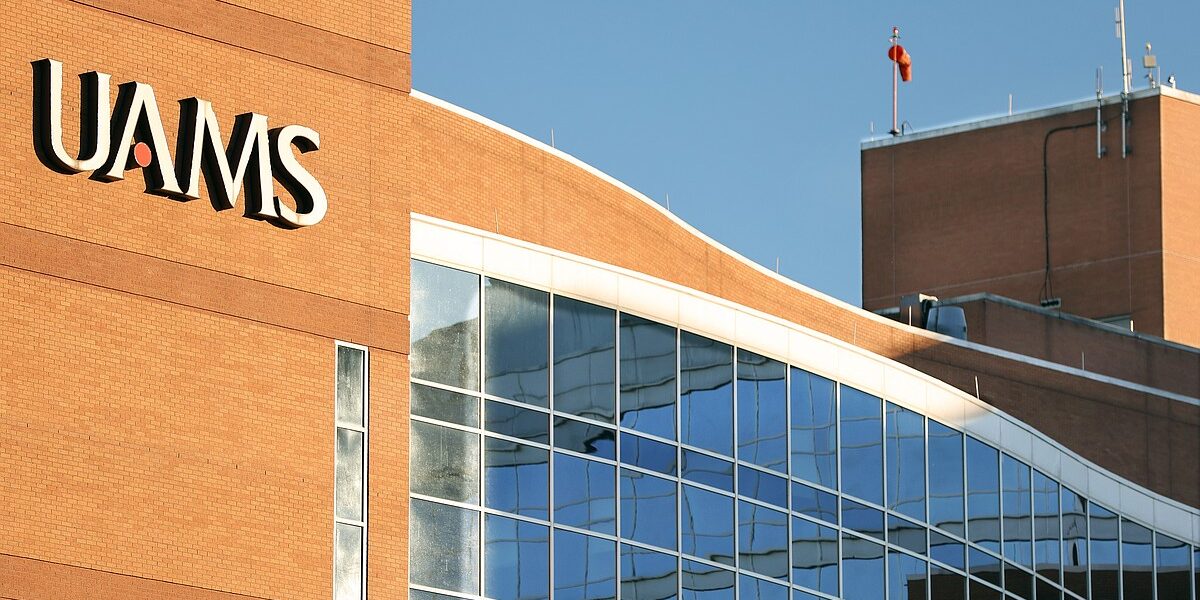
The University of Arkansas for Medical Sciences (UAMS) will receive $2.6 million from the National Institutes of Health (NIH) to expand its M.D./Ph.D. dual-degree program, officials announced Tuesday. This federal grant, distributed by the National Institute of General Medical Sciences, will add capacity for 10 additional students starting July 1 and continue over the next five years.
The program currently accommodates 22 students pursuing the seven- to eight-year joint path combining medical and research degrees. With the new funding, UAMS aims to bolster this pipeline of physician-scientists who can bridge clinical practice with biomedical research. Dr. Sara Shalin, professor of dermatology and pathology and director of the dual-degree program at the UAMS College of Medicine, said, “This training grant is going to enable us to strengthen and expand our existing M.D./Ph.D. program.”
Look, programs like this are crucial for Northwest Arkansas and the state as a whole. You don’t often see a university here with federal backing at this scale for training physician-researchers — a network often dominated by schools in major metro areas. In cities like Boston or San Francisco, expanding a program like this could cost double or triple the amount with less focus on Arkansas-centered health issues and research.
The added students mean more highly trained professionals who will have the expertise to conduct advanced research and care for patients. Over seven or eight years, these dual-degree graduates emerge as candidates to lead breakthroughs in medicine and elevate clinical care standards locally.
UAMS Medical Center, located on W. Markham Street in Little Rock, serves as the training ground where students combine rigorous coursework with hands-on experience. The funding will directly support stipends, tuition, mentorships, and research costs tied to these dual-degree candidates. That’s an investment with long-term payoffs not just for healthcare but also for local employment and innovation.
For Northwest Arkansas residents watching UAMS’s role statewide, this is a meaningful step. The university’s ability to grow its program means it can keep and attract talent who might otherwise pursue medical research careers out of state. It also complements the growing cluster of health sciences activity across Arkansas, including critical partnerships with the University of Arkansas and regional healthcare providers.
Expanding such programs here isn’t just a win for UAMS—it reflects the ambition of Arkansas to stake a claim in the competitive arena of biomedical research and education. And honestly, seeing this level of funding from the NIH puts Northwest Arkansas and Little Rock in a strong position compared to other mid-sized cities. It’s the kind of resource that would be tough to find elsewhere without larger established institutions or deeper pockets.
This comes at a time when skilled healthcare workers and physician-scientists are in demand, nationally and statewide. The UAMS dual-degree program offers a solid pathway for students committed to tackling complex medical questions with both clinical insight and lab research skills. Success here could influence treatments for diseases common in Arkansas and beyond.
While the primary grant target is to expand student numbers, the ripple effect includes elevating UAMS’s stature and possibly spurring further funding, collaborations, and industry connections. That momentum is key for states looking to diversify economies with knowledge-intensive fields.
In short, this $2.6 million NIH grant is more than a line item in a budget. It’s a boost to the kind of education that creates leaders who can reshape medicine locally and nationally. For the students and faculty involved, the investment signals confidence that Arkansas can be a hub for medical innovation, even outside the usual coastal innovation centers.
Source: NWA Democrat Gazette