NWA News

Arkansas’ rice farmers face challenges including war, weather, low prices

Arkansas, the nation’s largest rice-producing state, faces a precarious economic season in 2026 with farmers contending with soaring input costs and global market volatility. The convergence of geopolitical instability and adverse weather patterns has compressed profit margins across the state’s 1.3 million acres of rice paddies.

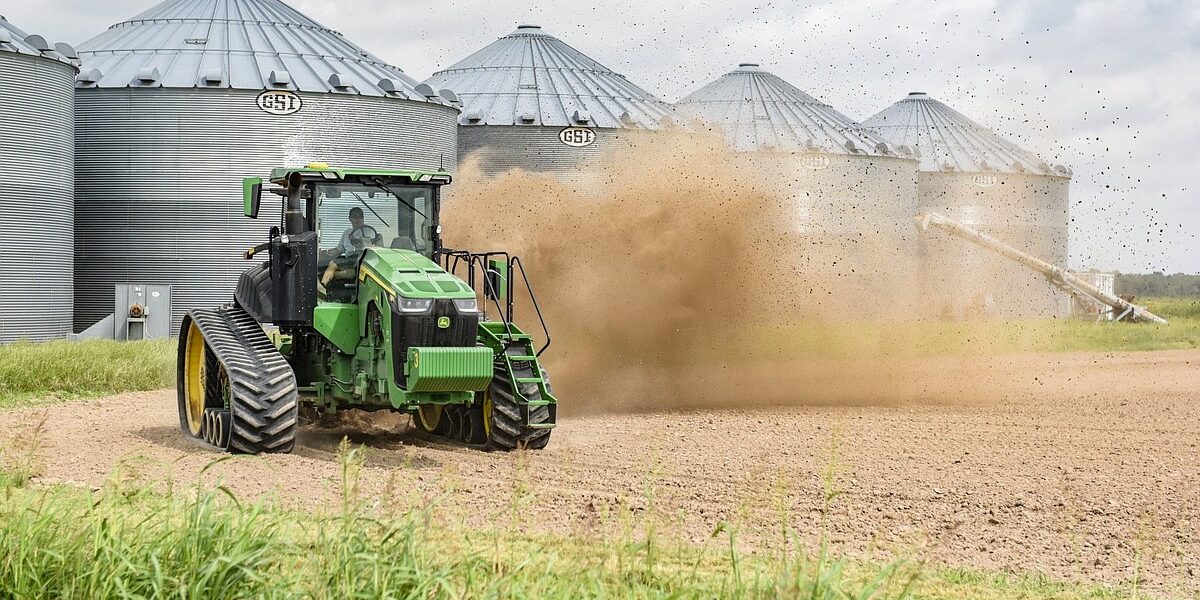
Emilio Chan of Isbell Farms drives a tractor around the edge of a rice field in Lonoke County on May 19, 2026.
The struggle begins at the farm gate. Rice is an agricultural commodity defined by its heavy reliance on inputs. Production requires significant amounts of diesel fuel and electricity to run irrigation pumps, as well as substantial quantities of nitrogen-based fertilizers. In 2026, both inputs have become expensive commodities. Geopolitical conflicts that have begun to destabilize global energy markets have driven up the price of natural gas, a primary feedstock for synthetic nitrogen production. Ohio-based Terra Nitrogen, one of the country’s largest ammonia exporters, reported record prices for its products in May 2026, reflecting the broader global energy squeeze. For Arkansas growers, importing and purchasing these concentrated fertilizers has added a layer of financial stress to the growing season. Producing rice also demands a precise manipulation of water. The crop thrives in flooded fields during the summer, a process that requires sixty to seventy days of standing water. In Arkansas, this necessitates a vast network of pumps to draw water from the Mississippi River levee system and channeled through regional canals. As diesel prices fluctuate in response to global tensions, the cost of pumping that water becomes a major line item on the monthly ledger. Emilio Chan, of Isbell Farms in Lonoke County, witnessed these dynamics firsthand during a field inspection on May 19. Driving a tractor around a dry field edge, Chan highlighted the difficult calculations farmers must make. With the cost of production climbing, many growers are reducing acreage or reallocating resources to focus on crops with better return on investment. The economics of the 2026 growing season present a stark contrast to previous years. Historically, a portion of the Arkansas rice crop is planted as an insurance policy—a “safety crop” planted later in the season after corn or beans. However, when the cost of planting that protective acre exceeds the projected market price, the logical financial choice changes. Northern Arkansas rice farmers, while not the primary producers compared to the hundreds of growers across the Grand Prairie, face similar headwinds. Rising costs for grain trucks, fuel for farm machinery, and repair services are hitting every segment of the supply chain. The strain is felt by the local agribusinesses that service these operations, from John Deere dealerships to local grain elevators. The ripple effects extend beyond the field. Rice processors in the region utilize Arkansas-grown grain to produce everything from sushi rice to brewing substrates. When farmer margins shrink, the volume of grain entering the supply chain can tighten, potentially affecting local labor and processing operations.

🔗 Read More

Source: NWA Democrat Gazette