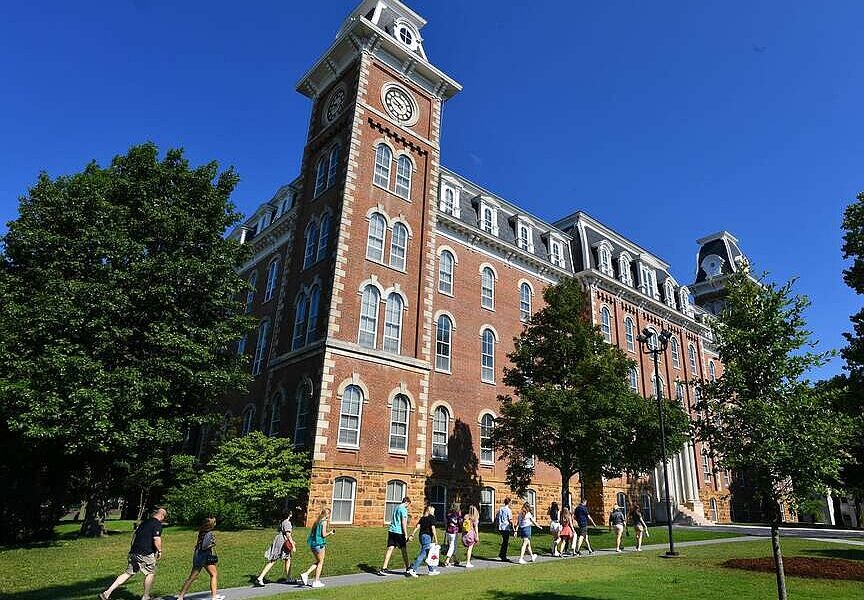
The University of Arkansas in Fayetteville announced Thursday that Associate Professor Will Richardson has secured a $2.16 million grant from the National Institutes of Health (NIH) to research systolic heart failure. This condition, which affects the heart’s ability to pump blood effectively, primarily involves the left ventricle, one of the heart’s lower chambers.
Systolic heart failure occurs when the left ventricle does not contract with normal strength, reducing the volume of blood circulated throughout the body. This inefficiency can lead to severe health problems including fatigue, fluid retention, and organ dysfunction. According to Johns Hopkins Medicine, the condition is one of the most common types of heart failure, impacting millions of individuals in the United States alone.
Richardson, who works within the Ralph E. Martin Department of Chemical Engineering at the university, will use the NIH funding to investigate the underlying mechanisms that cause systolic heart failure. His research aims to develop personalized treatment options and identify pharmaceuticals that can potentially reverse or mitigate the disease’s effects.
The project will be conducted in collaboration with Dr. Michael Zile, a cardiologist and distinguished university professor based in South Carolina. This partnership brings together expertise in cardiovascular medicine and chemical engineering to provide a multidisciplinary approach to the problem.
“The goal is to better understand the molecular and cellular drivers of systolic heart failure,” Richardson said. “Through this investigation, we hope to tailor treatments to individual patient profiles, improving outcomes and reducing the burden of this disease.”
The grant reflects the NIH’s prioritization of cardiovascular research, particularly given the growing prevalence of heart failure across the population. According to the American Heart Association, more than 6 million Americans currently live with heart failure, and the figure is expected to rise as the population ages.
The University of Arkansas’ involvement in this project highlights growing research capacity within the region’s academic institutions. The university has steadily expanded its focus on biomedical engineering and translational medicine, seeking partnerships that can bring laboratory discoveries to clinical application.
Richardson’s research will utilize advanced biochemical and biophysical techniques to analyze heart tissue samples, evaluate cellular responses, and test the efficacy of new drug candidates. The integrated approach combines engineering principles with medical science to identify key pathways involved in left ventricular dysfunction.
The collaboration with Dr. Zile, who has extensive clinical experience treating heart failure patients, will ensure that lab findings remain connected to patient needs. Zile’s role includes guiding the study design toward clinically relevant questions and facilitating access to patient-derived biological samples for testing.
Heart failure is a leading cause of hospitalization among older adults in the United States and is associated with high rates of morbidity and mortality. Current treatment options are often generalized, and many patients do not respond adequately to standard therapies.
By focusing on personalized treatment strategies, the research aims to improve the precision of interventions, tailoring medication and therapy regimens to the specific characteristics of an individual’s disease. This could reduce adverse effects and enhance the quality of life for patients living with systolic heart failure.
The $2.16 million NIH grant will support Richardson’s team for multiple years, covering personnel costs, research materials, laboratory equipment, and collaboration logistics. The university’s announcement emphasized how the funding will establish a platform for sustained investigation into heart failure mechanisms and therapeutics.
This research contributes to the ongoing efforts in medical science to address the complex challenges associated with chronic cardiovascular diseases, which remain among the top causes of death worldwide. Additionally, the project underscores the University of Arkansas’ role in advancing regional and national health research initiatives.
For Northwest Arkansas, projects like this at the Fayetteville campus reaffirm the area’s growing reputation as an emerging center for biomedical innovation. While the study’s findings may not translate immediately into clinical practice, the long-term insights generated could influence treatment protocols and drug development in the years ahead.
Further details about the research will be shared as the project progresses, with Richardson and his team working toward publications and presentations within the cardiovascular research community.
Additional coverage of related regional developments includes the Northwest Arkansas commission exploring funding mechanisms for infrastructure and the Winthrop Rockefeller Institute’s recent speaking engagements, reflecting the area’s broader civic and economic investment in health and infrastructure.
Source: NWA Democrat Gazette