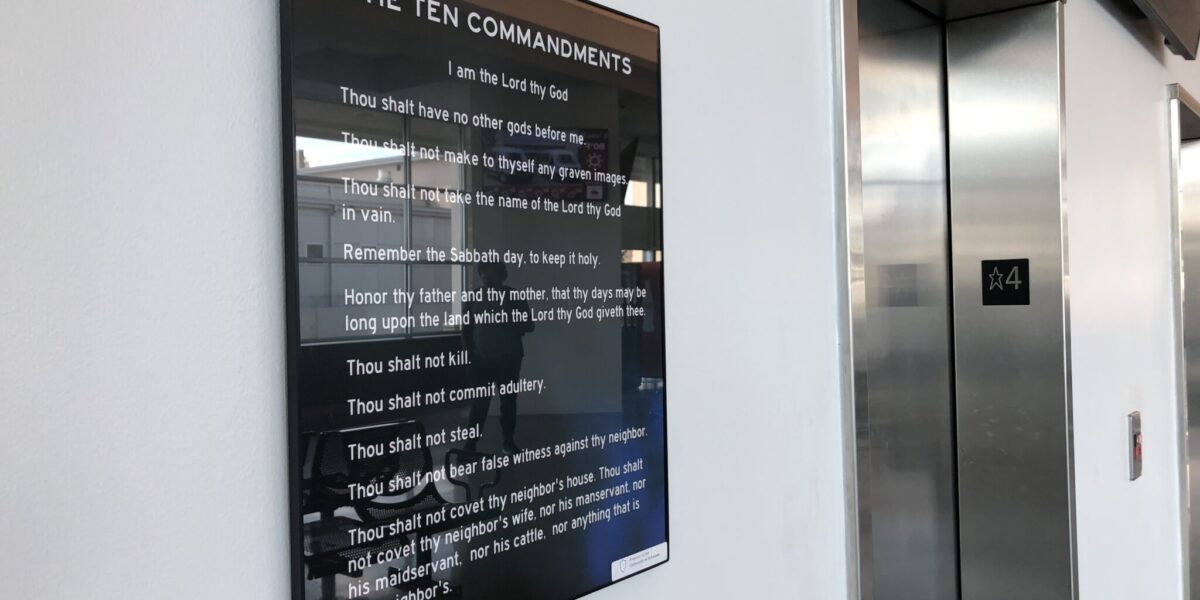
Several universities across Arkansas, including the University of Arkansas, have begun receiving Ten Commandments posters intended for classroom display. This comes after a state law, which mandates such displays, was deemed unconstitutional by a judge. Despite the ruling, the posters continue to make their way to campuses, raising eyebrows and legal questions.
According to the Arkansas Times, the donations are part of an ongoing effort to adhere to a law that some argue oversteps the separation of church and state. The law in question requires public schools and higher education institutions to display the Ten Commandments prominently, a move that sparked controversy when it was first introduced.
Critics of the law, including civil rights groups, argue that forcing educational institutions to display religious texts infringes upon the First Amendment. The judicial ruling that declared the law unconstitutional highlighted these concerns, emphasizing the importance of maintaining a secular educational environment.
The posters’ arrival on campuses has drawn mixed reactions from students and faculty alike. While some see it as an opportunity to discuss ethical and historical perspectives within educational contexts, others are concerned about the potential implications for religious freedom and inclusivity. The debate echoes wider national discussions about the role of religion in public spaces.
At the University of Arkansas, conversations have already started among student groups and faculty members regarding the appropriateness of these displays. It’s not the first time the university has found itself at the intersection of state policy and campus life. Previously, issues like state funding allocations and infrastructure improvements, much like the ongoing study of tolls for I-42 funding in Northwest Arkansas, have spurred similar debates about the balance between state control and institutional autonomy.
As the posters continue to be delivered, university administrations are left grappling with how to proceed. Legal experts suggest that the institutions might need to seek further clarification from the courts or await additional legislative guidance.
This unfolding situation reflects broader tensions within the state and the nation regarding the intersection of religion and public education. As Arkansas navigates these complex legal and ethical waters, the conversations happening in classrooms, student unions, and administrative offices will likely shape future policy decisions.
Source: Arkansas Times