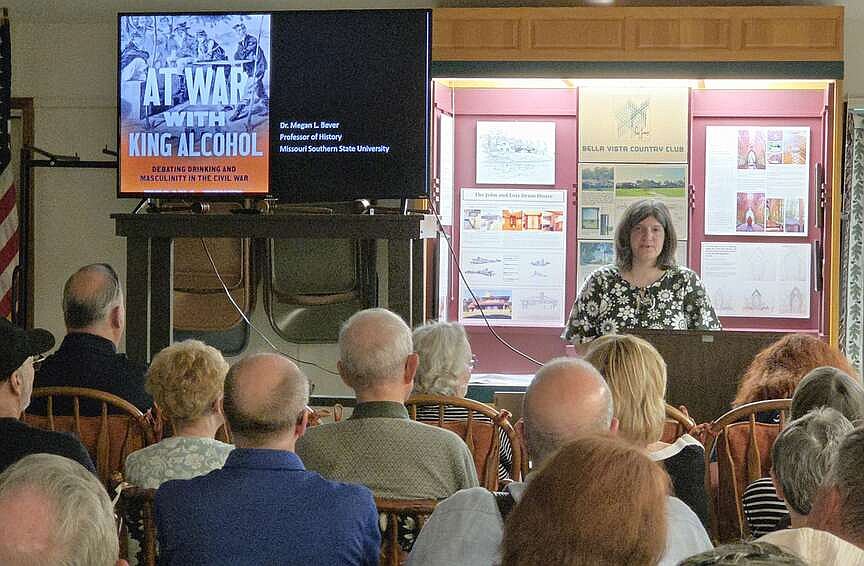
Dr. Megan Bever, history professor at Missouri Southern State University and author, spoke to the Bella Vista Civil War Round Table on June 4 at the Bella Vista Historical Museum about the role of alcohol—called “liquor” or “spirits” at the time—during the Civil War. Her presentation drew a crowd eager to hear how soldiers and medical personnel navigated the use of alcohol amid battlefield dangers and long encampments.
Dr. Bever outlined that liquor had four official uses during the war: combating illness, preventing malaria, mitigating exposure to harsh weather, and treating extreme fatigue. Her lecture drew from a variety of firsthand accounts—letters and diaries written by soldiers—that revealed how alcohol was woven into the daily lives of both Union and Confederate troops.
Outside of combat, soldiers often found themselves stuck in camps for extended periods, especially in winter months. Those stretches brought boredom, psychological strain, and loneliness. Bever noted that many soldiers turned to liquor to alleviate homesickness and the stress of war. “The war was as much a mental battle as a physical one,” Bever explained, “and spirits were seen as a comfort in the long downtime between battles.”
Despite its prevalence, alcohol use was controversial. Officers and enlisted men often debated how much drinking was acceptable. Some agreed that moderate consumption could support morale and well-being as long as it didn’t impair military effectiveness. However, this position frequently clashed with civilians back home, many of whom hoped for armies that abstained from alcohol entirely.
The simmering debate reflected broader societal tensions over alcohol that were already gaining ground in the 19th century. Bever pointed out that the Civil War coincided with the rise of temperance movements active in many parts of the country, including Arkansas. These movements influenced public opinion and civilian pressure, creating tension with soldiers’ practical realities.
Bever’s research also touched on the medical use of alcohol in wartime hospitals. Physicians often prescribed liquor not just as a stimulant but as a preventative measure against diseases like malaria, common in the swamps and river valleys soldiers traversed. Medical doctors of the era believed that small doses of spirits could warm the body and bolster resilience against fever. However, determining proper dosages was imprecise, with accounts of both helpful and harmful effects.
The meeting at the Bella Vista Historical Museum attracted local Civil War buffs who appreciated the depth Dr. Bever brought to a topic often overshadowed by battle narratives and political history. A member of the Round Table commented after the talk, “It’s fascinating to hear about the human side of soldiers’ experiences—how they coped with fear and hardship beyond the fighting.”
The museum itself has become a hub for Civil War history in Northwest Arkansas, hosting these monthly sessions where discussions range from tactics and leadership to the social and personal challenges soldiers faced. Dr. Bever’s approach focused squarely on those personal dimensions, connecting the past to the complicated realities of life in camp.
This event stands alongside other local history conversations, such as those held by the League of Women Voters when the executive director of the Winthrop Rockefeller Institute spoke earlier this year, reminding NWA residents how layered and nuanced their regional history remains.
Source: NWA Democrat Gazette