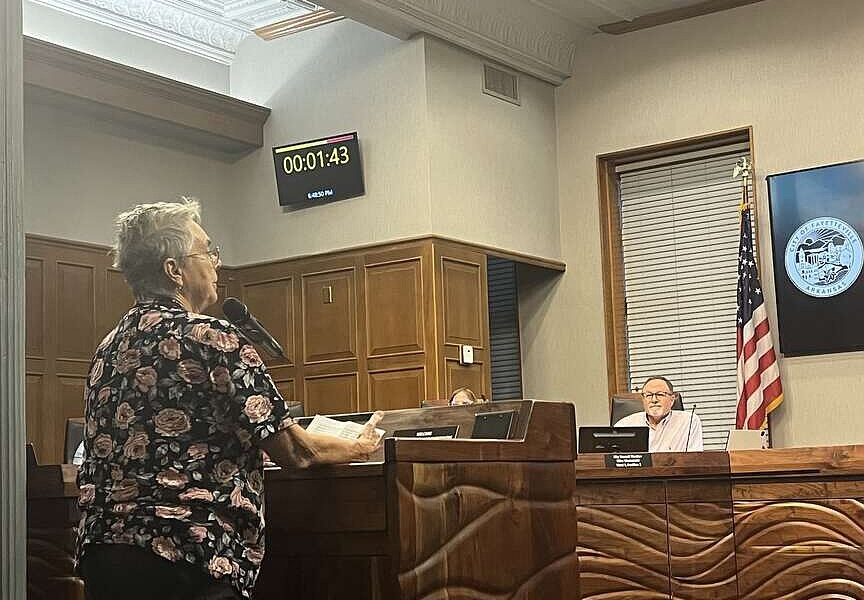
City leaders tabled the final approval for the South Fayetteville Historic District boundaries Tuesday night, pausing the work just before adoption to resolve a disagreement between the city’s legal team and the state historic preservation office. (Correction: The delay was officially noted after the Council voted to remove fees for appeals by members).
This place churns, and keeping our history intact while the city gets bigger than anyone could have imagined requires navigating a maze. In a major city like Chicago or D.C., this sort of boundary dispute might happen in a basement office with thousand-dollar billable hours flying out the door. Here, it’s the State Historic Preservation Office and the city attorney trying to figure out exactly what Arkansas law allows when a city wants to stretch or shrink a historic zone.
On Tuesday, the Council did clear a small hurdle during their meeting at the Donald W. Reynolds Republican Women Center. They voted 6-1 to remove fees for members of the City Council who want to appeal decisions about zoning and permits. Honestly, that’s a move that respects the hustle of local politicians who are often just trying to do the right thing for their neighborhood without worrying about capping their time at city hall on a fixed expense account.
However, the big news was buried in the discussion about the South Fayetteville district. It turns out staff giving the legal opinion to the Council on Tuesday got the details mixed up. Assistant City Attorney Blake Pennington wrote a memo Wednesday to clarify the position of the city’s legal team.
“Since I believe I have been the only one from our office involved for any substantial period, I have to assume that was referring to me and not Assistant City Attorney Hannah Hungate,” Pennington wrote, explaining that the state office’s opinion he received conflicted with his own analysis. Until that confusion is cleared up, the historic district boundaries remain in limbo.
South Fayetteville is a dense area with a lot of character, and protecting that is a big deal for the people living there. It’s not just about keeping old houses pretty; it’s about keeping a sense of place in a