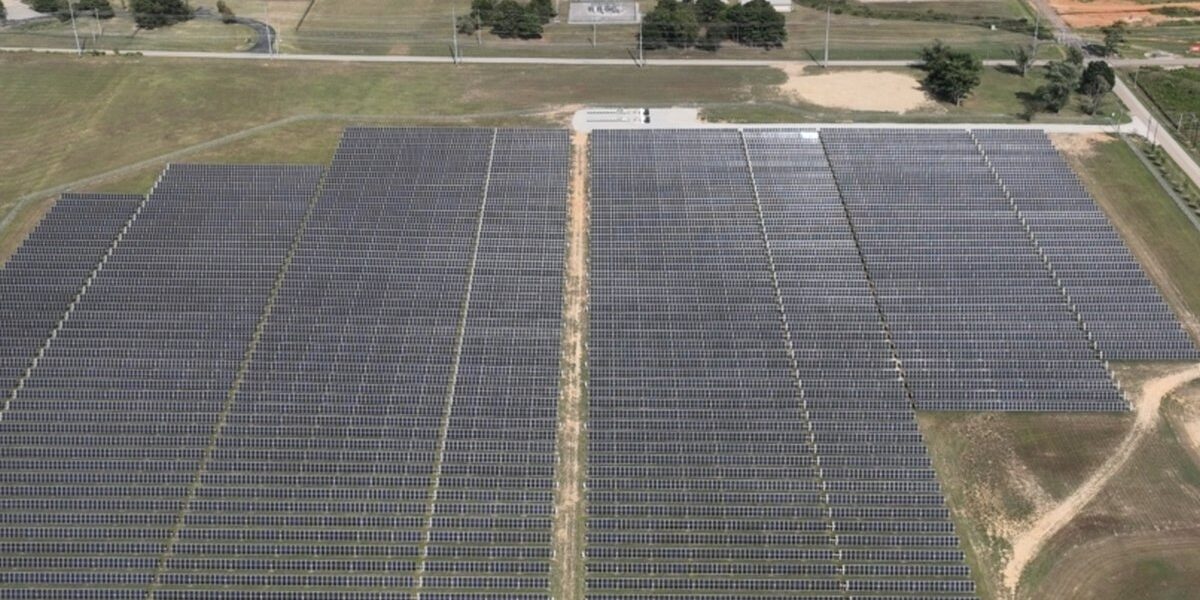
From the shoreline of Lake Beaver in Benton County, the expanse of the northern Beaver Water District site is now dominated by the infrastructure of a $10 million solar project. Madison Energy Infrastructure and Verogy have completed the installation of a distributed solar array at the Lowell facility, aligning the utility’s operations with a larger shift toward on-site renewable energy generation.
The array sits on approximately 25 acres of land owned by the utility, which provides water treatment and supply to roughly 500,000 residents across Northwest Arkansas. While the facility serves the public need for water, the new infrastructure represents a significant increase in the utility’s capacity for self-sustaining power generation. This reduces the district reliance on external commodity markets for power, a factor increasingly relevant to budget stability for municipal utilities.
Partners bring execution capacity
The build-out is the result of a partnership between Madison Energy Infrastructure, based in New York City, and Verogy, a distributed generation developer and construction firm located in West Hartford, Connecticut. Verogy brings experience to the project, having delivered utility-scale solar arrays across the United States.
The developers handle the capital investment. The project structure ensures Beaver Water District procures power from their own assets rather than purchasing it on the open market long-term. This approach allows the utility to hedge against fluctuating energy prices, which have seen volatility in recent years. For Northwest Arkansas families and businesses, a stable rate structure for water and electricity is a core component of local economic confidence.
“Innovative infrastructure like this helps stabilize operating costs,” said Morgan Hinsley, a analyst in the energy sector regarding public utility trends. “When a local utility owns its generation assets, it reduces exposure to broader market shocks.”
The completion of this array satisfies a growing list of renewable energy commitments within the state. As Arkansas utilities and municipalities look to portfolios that balance reliability with emissions targets, on-site generation at critical infrastructure sites has become a viable strategy.
Expanding the local footprint
The Lowell location
Source: Talk Business & Politics