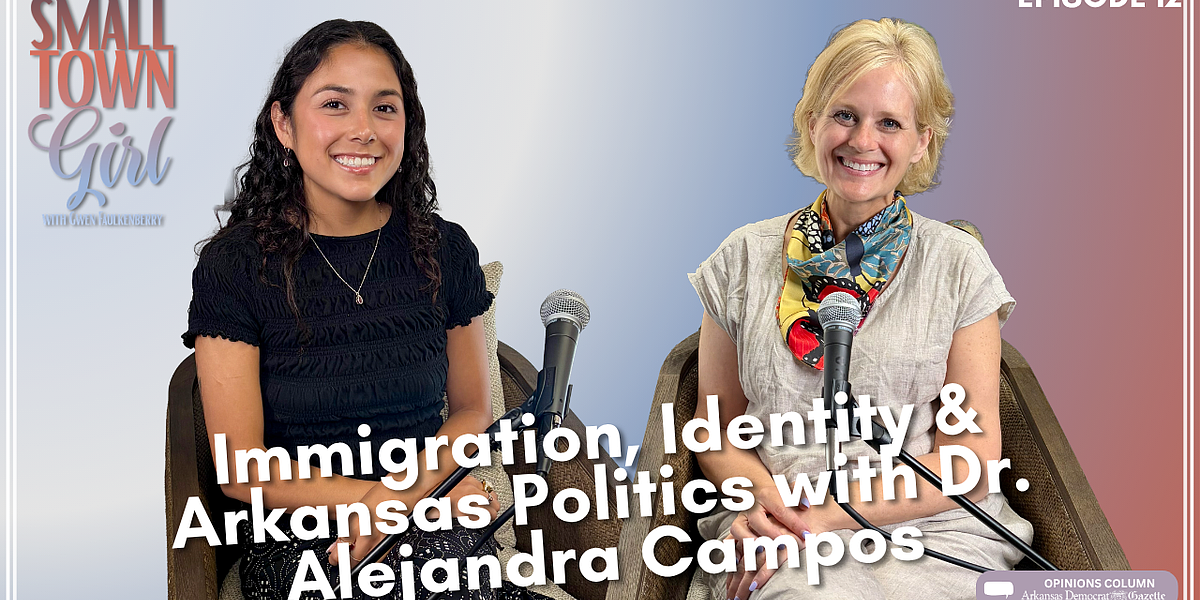
Dr. Alejandra Campos, a political science professor at the University of Arkansas, shares her family’s immigration journey from Mexico to Springdale in the 1990s in the latest episode of the Small Town Girl podcast. The episode dives into immigration issues in Arkansas, Latino identity, and the complex realities of local politics that continue shaping the region.
Born and raised in Northwest Arkansas, Campos’ experience reflects the blending of cultures and challenges faced by many families here. Her parents moved to Springdale seeking work in the poultry industry, which has long been a backbone of the local economy but also a focal point for immigration debates and labor discussions. She describes how her parents made significant sacrifices to provide educational opportunities for their children, planting the seeds for a future invested in learning and civic engagement.
Campos’ story is unique yet familiar — balancing the pride of heritage with navigating a sometimes complicated political landscape in Arkansas. She explains how her upbringing in Springdale, followed by studies at the University of Notre Dame in Indiana, shaped her perspective on identity and belonging. Returning to Fayetteville as a professor, she now brings firsthand insight to conversations around immigration, voting rights, and education in NWA.
A core part of the episode touches on the nuanced role immigration plays in Arkansas politics today. Campos discusses how local narratives often overlook the human stories behind policies and headlines, including the contributions Latino families make to the community, economy, and civic life. She argues that understanding these stories is crucial for informed debate and policymaking in Washington County and beyond.
As Arkansas grapples with evolving demographics, Campos highlights the importance of addressing voting access and representation. She points to the need for increased civic participation among immigrant communities to ensure their voices are heard in elections that impact their futures directly. This includes tackling barriers that can prevent new citizens and their families from fully engaging in the democratic process.
Education also features prominently in Campos’ reflections. Drawing on her family’s emphasis on schooling, she stresses its role not only in personal advancement but as a bridge connecting diverse communities. Her work at the University of Arkansas includes mentoring students from immigrant backgrounds and encouraging inclusive conversations on campus about cultural identity and political involvement.
The episode was hosted by Gwen Faulkenberry, an Ozark-based author, professor, and columnist who has covered a wide range of Arkansas stories. Together, they provide a grounded and thoughtful look at how immigration, identity, and politics intersect in this corner of the state. Campos’ narrative offers a personal lens into issues that often echo in Benton and Washington Counties—from the poultry plants to the polling locations.
Listeners interested in how immigration shapes local communities and political debates will find Campos’ story both enlightening and relatable. Her journey from a Springdale neighborhood to academic halls up north and back to Arkansas highlights the ever-evolving identity of Northwest Arkansas itself.
Source: NWA Democrat Gazette