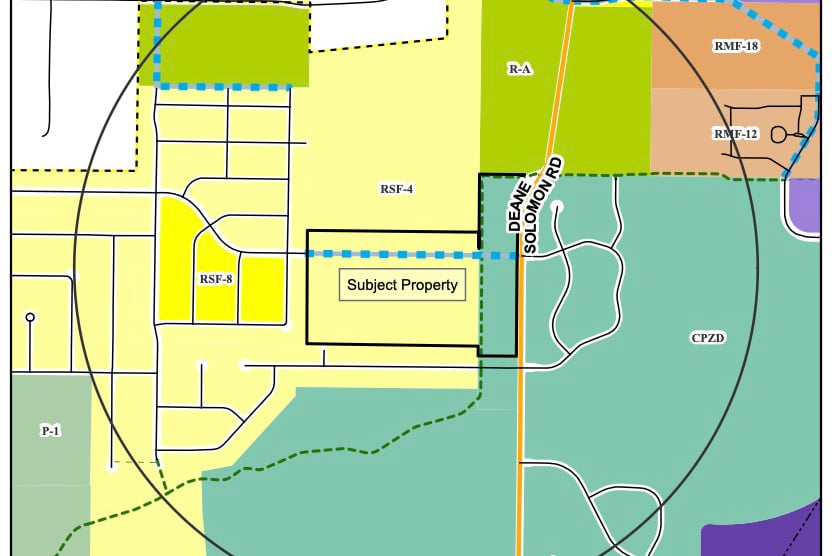
The Fayetteville Planning Commission voted 7-0 on Tuesday to recommend approval of a rezoning request that could bring higher-density housing to about 36 acres in west Fayetteville.
The property, located near the intersection of North Deane Solomon Road and West Vanike Drive, is currently zoned for single-family residential use at a maximum of four units per acre, as well as a commercial planned development district. The applicant, DRP Holdings LLC, is seeking to rezone the land to allow for up to eight single-family units per acre and multifamily residential development of up to 12 units per acre.
Honestly, it’s a noticeable shift for that part of town. The area, just west of the University of Arkansas campus and not far from Razorback Road, has largely remained low-density residential or commercial. This change would open the door for more compact housing options — something planners and city leaders have been talking about as Fayetteville continues to grow and attract new residents.
Look, this isn’t just about swapping zoning labels. If the City Council follows the Planning Commission’s recommendation — which it will consider at an upcoming meeting — the rezoning could lead to hundreds of new housing units in a part of Fayetteville that’s already seeing development pressure. It also aligns with the city’s broader goals of increasing housing diversity and walkable neighborhoods, especially near transit routes and employment centers.
The Planning Commission did not request any modifications to the proposal during its meeting on Monday. The decision now moves to the Fayetteville City Council, which is expected to take up the matter in June.
DRP Holdings LLC hasn’t released specific development plans yet, but the rezoning would allow for a mix of single-family and multifamily homes — including duplexes, townhomes, or small apartment buildings. That kind of housing could appeal to young professionals, graduate students, or downsizers looking for low-maintenance options without leaving the city.
In a city where housing costs have climbed steadily over the past decade, especially near the university, this kind of rezoning could help open up opportunities for a broader range of residents. It’s not the kind of thing that will solve the affordability crisis overnight, but it’s a structural change that allows the market to respond to demand in a different way.
And let’s be honest — in a place like Fayetteville, where land is at a premium and development often skews toward the suburban, this is a rare opportunity to build more housing in an area that’s already connected to the urban core. You wouldn’t see a rezoning like this get a quick, unanimous vote in a bigger city without a fight. Here, it moved forward quietly, with little public comment.
The property sits just a few blocks from existing neighborhoods like those on Creekside Drive and Wedington Drive, which are a mix of single-family homes and older apartment complexes. If built out, the new development could blend into the surrounding area while offering more choices for people who want to live close to downtown or the UA campus but can’t find housing in their price range.
City staff said the proposal met all relevant zoning standards and that the infrastructure in the area — including water, sewer, and road access — could support the increased density. Environmental concerns were minimal, and no historic sites or protected areas are impacted by the rezoning.
The Fayetteville City Council will take up the rezoning request at its next regular meeting, scheduled for June 9. Anyone interested in the outcome can watch the meeting live or sign up to speak during the public comment period.
Source: Fayetteville Flyer