A federal judge has upheld the State of Arkansas’s authority to maintain protective zones around voting locations, a move intended to ensure that voters can cast their ballots free from intimidation or disruption. The ruling follows challenges to the state’s regulations that restrict certain activities near polling places, a practice that has generated debate over First Amendment rights and voter access.
These protective zones, often defined by a limited radius around polling place entrances, prohibit activities such as campaigning, electioneering, and distributing political literature. The restrictions aim to safeguard voters from pressure or harassment while they participate in elections. Arkansas’ measures align with similar laws in other states designed to preserve order and neutrality at voting sites.
The recent court decision comes amid ongoing national discussions about maintaining the balance between First Amendment protections and election integrity. Opponents of such zones argue that confining speech to specific areas—commonly referred to as “free speech zones”—effectively limits constitutional rights by restricting where people can express their views during critical voting periods.
The concept of “free speech zones” has been especially controversial on college campuses, where they have long been employed to manage protests and public demonstrations but are now increasingly applied to other settings, including elections. Critics contend that while the intent is to protect orderly voting, the zones sometimes create a false sense of free speech by allowing expression only within designated boundaries, thereby limiting broader public discourse.
Arkansas’ law reflects this tension. Supporters stress that without these zones, voters—particularly those who may be vulnerable or less familiar with the voting process—risk exposure to intimidation or coercive tactics. They argue that the state has a compelling interest in preserving a calm and secure voting environment to ensure that ballots are cast freely and fairly.
In the ruling, the federal judge acknowledged the state’s responsibility to prevent voter intimidation and upheld the legal foundation for restricting electioneering activities within a narrow perimeter of polling locations. The decision affirms that while free speech is a fundamental right, it is not absolute and can be subject to reasonable limitations in contexts where public safety and order are at stake.
Critically, the ruling emphasized that the restrictions apply only in and around designated voting areas, allowing political expression to continue outside those zones. This approach attempts to strike a balance between protecting the integrity of the voting process and preserving the public’s right to engage in political speech elsewhere.
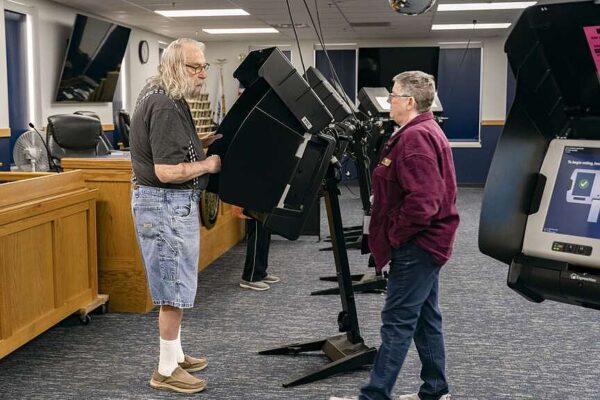
The Benton County Clerk’s Office in Bentonville, a frequent site for early voting, has operated under these protective zones, which prohibit campaigners and protestors from coming within a defined radius during voting hours. Voters in Fayetteville, Rogers, and Springdale encounter similar regulations when casting ballots in municipal, state, and federal elections.
Election officials in Northwest Arkansas generally view the protective zones as essential tools for minimizing disruptions on Election Day. According to the state’s Secretary of State office, these measures are part of a broader strategy to promote voter confidence by preserving a neutral and secure atmosphere at all polling locations.
Legal experts following the case note that the Arkansas ruling aligns with precedent set by the U.S. Supreme Court, which has upheld reasonable time, place, and manner restrictions on speech when justified by compelling state interests. However, they caution that courts must continuously scrutinize such rules to ensure they do not unnecessarily infringe upon constitutional protections.
The debate over the proper scope of these zones is particularly relevant for Northwest Arkansas as the region continues to grow and diversify politically. Local advocacy groups have urged election commissions to maintain vigilance about how these regulations are enforced to prevent any chilling effects on voter participation, especially among minority and first-time voters.
This issue resonates with broader national efforts to balance election security with voter accessibility amid increasing concerns about misinformation and attempts at voter suppression. Arkansas is among a handful of states that have recently updated or defended their protective zone statutes, highlighting the ongoing judicial considerations about election practices.
While the ruling supports the state’s current approach, it also calls attention to the necessity of clear communication with voters and campaigners about the boundaries and purposes of these protective zones. Ensuring voters understand their rights and the regulations around polling places remains a key component of successful elections administration in Northwest Arkansas.
As election cycles progress, observers in the region will be watching how these zones affect voter turnout and political activity around polling sites. The federal judge’s decision affirms the principle that safeguarding voters from interference is a state responsibility but leaves open the requirement that such protections be implemented carefully to avoid undue suppression of speech.
Source: NWA Democrat Gazette