Take a look at those numbers, honestly. In the last eight months, the state of Arkansas’s partnership with federal Immigration and Customs Enforcement has exploded. We’re talking a 653% increase in personnel contracts under the 287(g) Task Force Model. That isn’t just a slight uptick; that’s a total reconfiguration of how local law enforcement interacts with federal immigration policy.
Back in 2025, the program had 13 active agency partnerships. Fast forward to now, and that count has jumped to 98. That means nearly every other sheriff’s office and local jurisdiction in the state is now signed on as a contractor for ICE. If you think about how this would look in a major metropolis with a federal budget, it’s massive—and happening here, under our watch.
What does it actually mean?
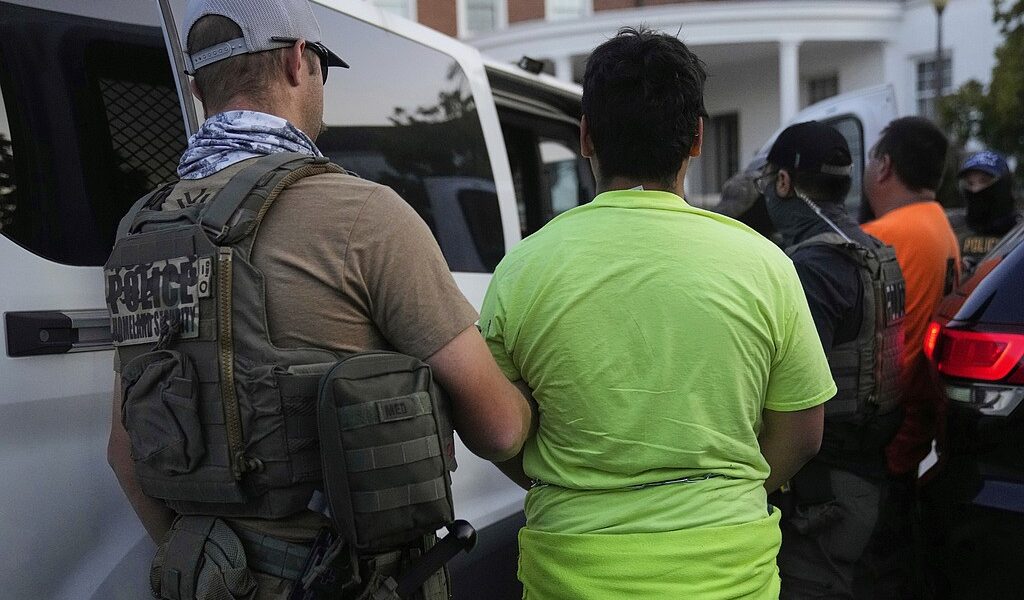
The 287(g) program allows state and local law enforcement officers to ask about immigration status, pick up undocumented immigrants for questioning, and hand them over to federal authorities for deportation. For the officers on the ground in Rogers, Springdale, or anywhere in Benton County, this expands their role from strictly keeping the peace to partnering in federal enforcement efforts.
It’s a hustle play for local PDs. By contracting with ICE, they get access to federal resources and training. It shifts the paradigm of what a local sheriff’s deputy or town marshal is responsible for. Instead of just handling local crimes, they now carry the weight of national immigration law across their patrols.
The source material points out that one lawyer in the state has noted that criminals are not the sole focus of this initiative. That distinction is important. You’ve got jurisdictions where the primary engagement with these new powers might not be busting a drug ring, but rather checking documentation at traffic stops or having a conversation in a jail cell that maybe didn’t happen before. It’s a fundamental change in the relationship between the community and its local protectors.
The scale of the shift
This rapid growth—13 to 98—isn’t something that happened quietly. The State Police and various sheriff’s departments across Arkansas have moved with speed. It suggests a unified push or a new directive coming down from the state level to get certified cooperation officers on the street, in the jails, and interacting with the public daily.
For the families living in the rural beats and the subdivisions of Northwest Arkansas, this changes the street calculus. When you call the non-emergency line or see a squad car, the context of that interaction is different. It means folks are likely to come into contact with law enforcement who now have the legal grounds to check immigration status, simply because the jurisdiction is now part of the Task Force Model.
This isn’t a corporate merger; it’s a public safety evolution. The local agencies are essentially taking on more responsibility, outsourcing the actual deportation part to ICE but keeping the investigation and detention power in-house. It’s a heavy lift for local budgets and local morale, but it’s clearly a path many have chosen to follow.
To stay informed about how your local law enforcement agency is utilizing these new federal partnerships, attend
Source: NWA Democrat Gazette