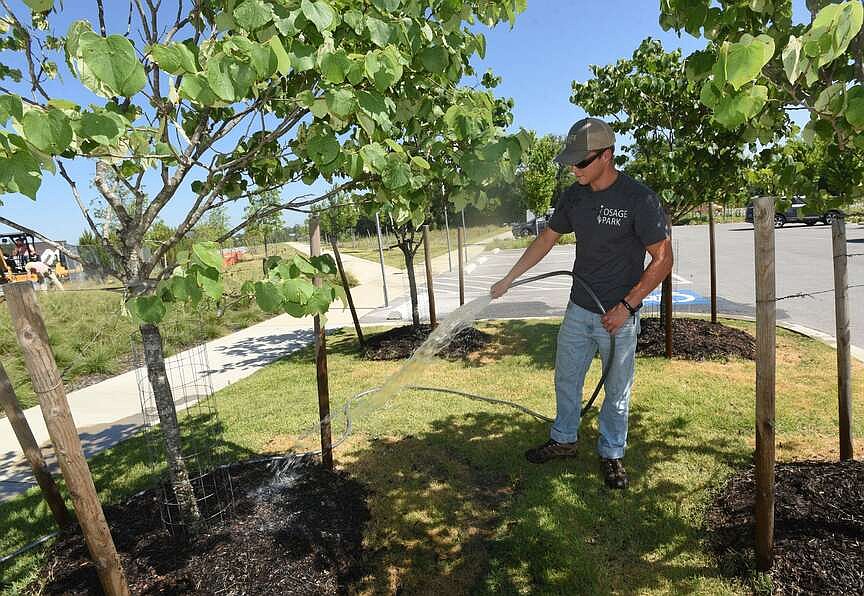
Fayetteville officials are asking residents to focus their watering efforts on trees rather than lawns as drought conditions continue to tighten their grip on Northwest Arkansas. The city’s urban forester, John Scott, emphasized that young trees—those planted within the last three to five years—need the most attention right now because their root systems haven’t yet grown deep enough to access moisture beneath the dry soil.
Scott’s advice comes amid persistent dryness that’s stressing not only newly planted trees but also mature and aging trees. While mature trees can sometimes weather dry spells, those showing visible signs of drought stress are vulnerable. “Very old trees may struggle to recover if drought stress becomes severe,” Scott noted in a recent city news release.
Watering lawns is a tough sell these days, especially when the region faces ongoing drought. Fayetteville’s recommendation is clear: save the water for trees that truly need it. Over-watering or unnecessary watering risks wasting water and can even cause harm to trees. The city encourages residents to observe their landscapes carefully and prioritize watering only those trees that show signs of stress.
Young trees are particularly vulnerable. Since they rely heavily on surface moisture, they benefit most from targeted watering. Many neighborhoods with new developments along Wedington Drive and parts of the Razorback Road corridor have seen a wave of recently planted street trees and backyard saplings that fit this description.
Older trees, especially those in historic spots around downtown Fayetteville or along the older neighborhoods near Dickson Street, may show signs of leaf scorch or early leaf drop. These are indications they’re struggling and could benefit from supplemental watering during the drought.
The city’s approach aligns with broader water conservation measures that have been part of Fayetteville’s response to the dry conditions. As the dry spell lingers, it’s unlikely that watering restrictions will ease any time soon. Prioritizing tree care helps protect shade cover and urban canopy that residents depend on for cooling and community character—especially important in a place where Walmart’s sprawling campus and local businesses create large heat islands.
Skeptics might glance at their brown lawns feeling the usual pressure to keep them green, but the message from Fayetteville is that lawns can survive with less water, while trees are a long-term investment vital to the city’s environment and property value. Mulching around trees and avoiding watering during the hottest parts of the day are additional tips Scott recommends for efficient water use.
For Fayetteville residents wondering how to know if their trees need watering, the urban forestry department suggests simple tests: look for drooping leaves, dry soil several inches down, and delayed leaf-out in the spring. These signs mean it’s time to give the tree a good soak.
The drought’s impact on trees isn’t unique to Fayetteville. Bentonville and Rogers have also seen similar effects on their urban and suburban trees. Local volunteers and tree advocacy groups have started campaigns encouraging people to check on their trees and report stress signs to city forestry officials.
In a region where growth can sometimes feel like it’s outpacing nature, keeping an eye on the health of local trees is one way residents can stay connected to the landscape. Fayetteville’s call to focus watering efforts on trees makes clear that, for now, a brown lawn is less important than saving the shade.
Source: NWA Democrat Gazette