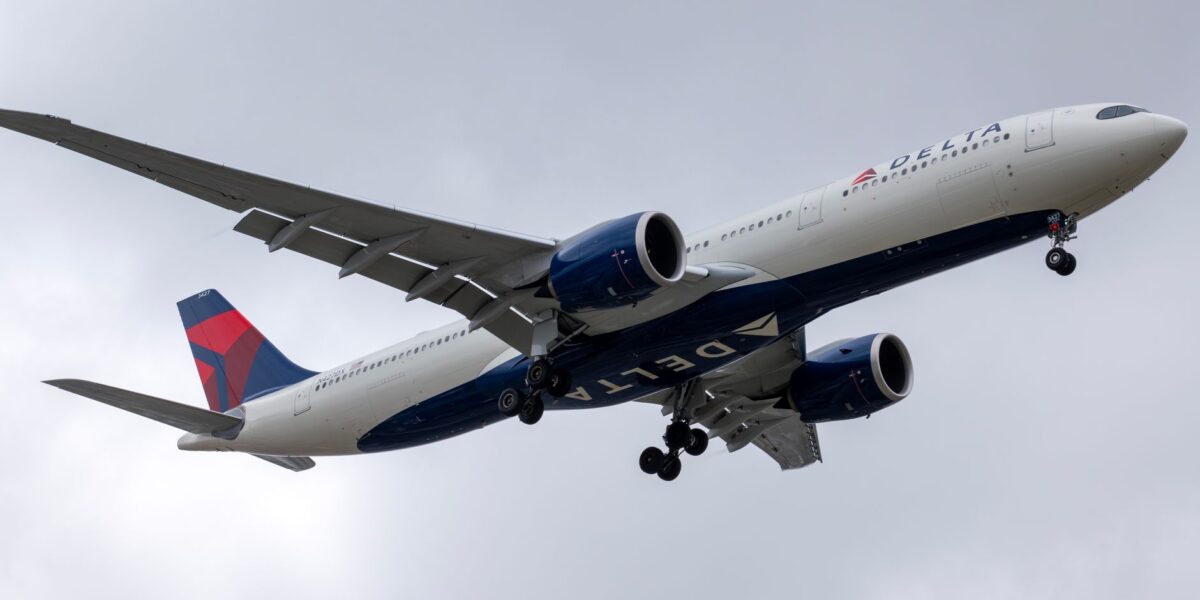
The Federal Aviation Administration (FAA) is investigating an incident in Massachusetts where a Delta Air flight had to abort its landing to avoid a collision with an American Airlines plane taking off from a intersecting runway. The event, known as a “go-around,” occurred when air traffic controllers noticed the potential conflict and instructed the Delta flight to climb again instead of touching down.
Go-arounds are uncommon but crucial safety maneuvers pilots perform to prevent accidents when runways or airspace become temporarily obstructed or unsafe. In this case, the Delta flight was on final approach when the American Airlines plane began its departure, forcing controllers to act quickly.
Incidents like this highlight the intense coordination necessary in busy airports, especially one like Logan International Airport in Boston where intersecting runways can create complex operational challenges. The FAA’s investigation will review communication between pilots and controllers, timing, and procedures followed during the event.
While details of the flight numbers involved or the exact timing have not been released, the FAA confirmed no injuries occurred and both flights safely returned to normal operations after the alert. Passengers on both planes reportedly remained calm throughout the maneuver.
This kind of probe is standard when near-conflicts occur in aviation. Northwest Arkansas residents may find it interesting given the Rogers Municipal Airport and XNA Regional Airport’s growing traffic. As NWA’s air travel demand continues to rise, keeping a close eye on safety procedures at busy regional airports becomes increasingly important.
For comparison, a go-around at a major hub like Atlanta’s Hartsfield-Jackson or Chicago O’Hare can cause ripple effects due to the sheer volume of flights. Logan’s tightly spaced runways make split-second decisions crucial, similar to what you’d expect in NWA if XNA expanded its services or runway configurations in the future.
Honestly, go-arounds get overlooked by passengers but are one of the clearest signs of aviation safety working as intended. Pilots, air traffic controllers, and ground crews all synchronize to adjust on the fly and keep everyone secure. If you’ve ever worried about that sudden climb back into the air instead of sitting down on the runway, this incident puts that scenario into perspective as a safety precaution, not a crisis.
In Rogers and Fayetteville, where regional airline growth has accelerated, the FAA’s diligence on incidents elsewhere reinforces the need for ongoing investments in training, technology, and communication systems. If we compare NWA’s airport environment to major city airports, we have fewer intersecting runways but that means less margin for error, making efficient coordination and response protocols critical.
The FAA investigation timeline is not expected to be long, but findings could inspire adjustments nationally or locally to make sure that intersecting runway operations remain safe. NWA’s growing role in commercial aviation means these lessons matter close to home.
Source: 5News KFSM