Conway Corp activated phase 3 of its emergency water curtailment plan Wednesday due to persistent drought conditions in Faulkner County. The move mandates significant reductions in outdoor water use for all residential and business customers in Conway, according to a news release from the utility.
Under the phase 3 restrictions, customers are limited to watering lawns once per week depending on their address number. Residents at even-numbered addresses may water on Saturdays, while those at odd-numbered addresses are allowed to water on Sundays. This limitation is aimed at reducing overall outdoor irrigation demand, which typically constitutes a substantial portion of residential water use during dry periods.
Swimming pools are now prohibited from being filled, reflecting the priority given to conserving water for essential needs. Potted plants and flower beds may receive a minimum amount of water, but only through handheld containers rather than automated sprinkler systems. The restriction intends to allow for some plant maintenance while minimizing wasteful runoff or overwatering.
Commercial, industrial, and institutional customers face potential mandates to decrease their process water usage. Conway Corp has not released specific targets for these sectors, but the announcement signals increased scrutiny over non-residential consumption as part of the conservation effort during the drought emergency.
Vehicle washing is strictly regulated to methods that reduce water use. Permitted options include pressure washers, garden hoses equipped with shut-off nozzles, or any system classified as high-pressure with low water consumption. This limits the use of older, less efficient washing methods that waste water.
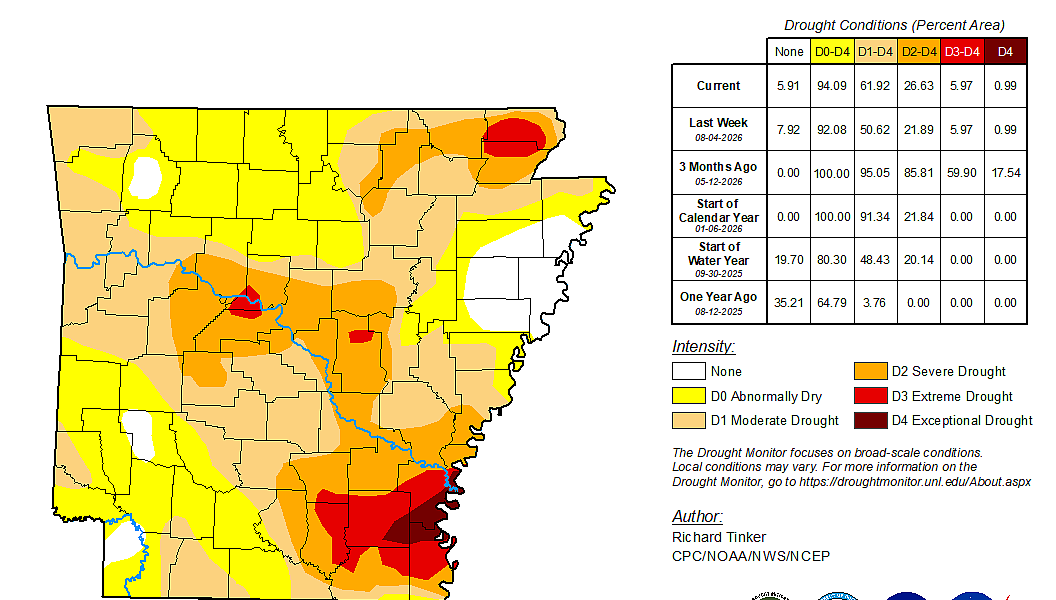
Faulkner County continues to experience below-average rainfall, stressing local water supplies. The National Weather Service data provided by Richard Tinker shows that drought severity in the region has intensified through August 2026, prompting the tiered curtailment actions from Conway Corp. The utility’s phased water emergency plan is designed to escalate conservation measures in response to worsening conditions.
Phase 3 follows earlier restrictions implemented in previous weeks which included voluntary reductions and less stringent watering schedules. With water reserves declining and demand remaining steady or increasing during warm months, Conway Corp deemed it necessary to enact these tighter controls to protect the system’s capacity and ensure water remains available for essential uses.
Conway Corp serves a population exceeding 60,000 and is the primary water provider in the city of Conway as well as surrounding areas. The corporation’s emergency plan seeks to prolong reservoir and groundwater availability while minimizing the risk of critical shortages if drought conditions persist or worsen. Failure to adhere to the curtailment measures could prompt further enforcement actions, though the company has not detailed penalties at this stage.
The ongoing drought and resulting water restrictions follow similar trends seen elsewhere in Arkansas and across the region this summer, where seasonal precipitation deficits have challenged water utilities and agricultural producers alike. The Arkansas Department of Emergency Management has highlighted drought as a growing concern, recommending coordinated responses among municipalities and water authorities.
For households and businesses in Conway, the phase 3 limitations require adjusting usual outdoor activities such as lawn maintenance, pool filling, and vehicle cleaning. Customers are encouraged to use water judiciously and prioritize essential indoor consumption to contribute to community-wide conservation efforts.
This escalation of water curtailment appears necessary given the meteorological data signaling continued dry spells through the fall. Conway Corp officials stress that these measures aim to avoid more severe restrictions or emergency declarations that could impact daily life and business operations more drastically.
The utility will monitor hydrological conditions and water usage trends closely with the National Weather Service data to determine if further curtailments or a return to normal usage guidelines are warranted. Updates will be communicated through official Conway Corp channels as the situation evolves.
Conway’s phased approach to managing scarce water resources exemplifies the challenges faced by growing communities in balancing development, quality of life, and environmental constraints—particularly under changing climate patterns that affect seasonal rainfall and water supply reliability.
Source: NWA Democrat Gazette