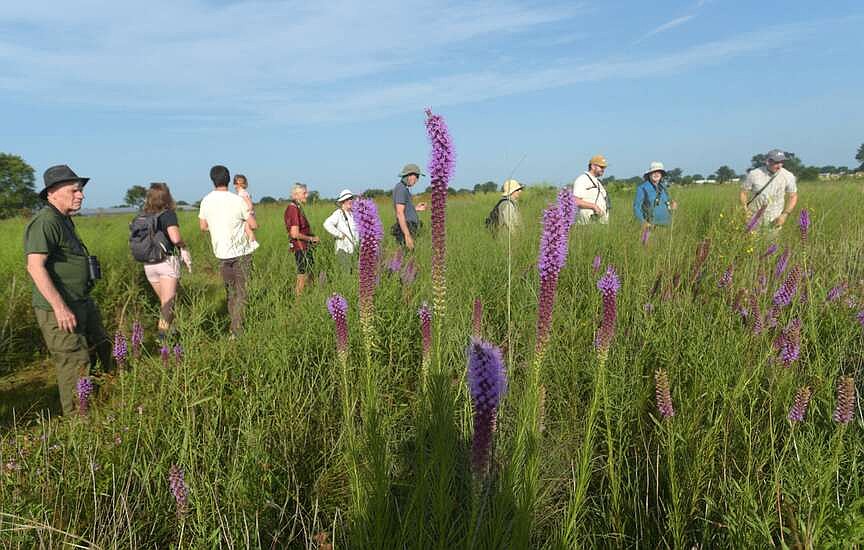
Visitors to Chesney Prairie Natural Area in Siloam Springs got a vivid reminder that summer here isn’t all about heat waves and slow days. The prairie, far from quiet or dormant, was bursting with life this July thanks to a vibrant stand of blazing star wildflowers and an active chorus of birds and bees.
On July 11, the Northwest Arkansas Audubon Society led a field trip to the prairie, illustrating how this patch of natural habitat ignites in full color and sound as summer progresses. The blazing star wildflowers, with their distinctive purple spikes, are a key player in this show, offering nectar and pollen that sustain a variety of pollinators. It’s a scene that many urban dwellers might pay big bucks to see or recreate, but here in Northwest Arkansas, it’s an accessible and authentic glimpse of native prairie ecology.
What’s striking is how this environment manages to stay so lively even as temperatures climb toward the 90s. Many people think of summer in terms of drought or heat fatigue, but the prairie proves resilient, providing critical habitat for wildlife during this challenging season. The buzzing bees and fluttering butterflies aren’t just pretty distractions — they’re lifelines that keep ecosystems functioning and diverse.
The Audubon Society’s annual summer field trip is more than just a guided walk; it’s an educational window into the delicate interdependence between plants and pollinators. In a region where open prairie is increasingly rare thanks to development and agriculture, spaces like Chesney Prairie serve as living classrooms and conservation priorities.
It’s honestly pretty remarkable to watch these dynamics firsthand. In a big city, finding wildflowers blooming naturally alongside active bird populations would require a trip to an expensive nature preserve or botanical garden. In Siloam Springs, it’s just part of what a summer afternoon on the prairie offers.
For local nature lovers, the prairie’s summer show reinforces why preserving these habitats matters. Birds like meadowlarks and sparrows, as well as a host of native bees, depend on the prairie’s summer blossoms for food and shelter. The prairie plants, in return, rely on these creatures for pollination—a cycle that’s easy to overlook but essential for long-term ecosystem health.
Chesney Prairie’s ongoing vitality during the dog days also highlights the wider conservation efforts in Benton County and Northwest Arkansas that aim to keep native landscapes intact amid rapid growth. It’s an encouraging sign that this region is balancing development with environmental stewardship in a way some larger metro areas struggle to achieve.
There’s a practical takeaway here too: for anyone interested in supporting local natural areas, getting involved with groups like the Northwest Arkansas Audubon Society can make a real difference. These organizations facilitate education opportunities, volunteer projects, and advocacy work that help keep prairies blooming year after year.
For those who want to experience it themselves, the Chesney Prairie field trip is a highlight on the local calendar, and the blooming wildflowers create a picture-perfect moment to connect with nature within striking distance of the city. The prairie’s alive, and it’s ready to show off.
Source: NWA Democrat Gazette