Sponsors of two proposed constitutional amendments — one to expand public school funding, the other to strengthen citizens’ power to place initiatives on the ballot — have gathered fewer than 45,000 signatures so far, according to the Arkansas Democrat-Gazette. They must collect nearly 91,000 valid signatures by early July to qualify for the November 2026 general election ballot.
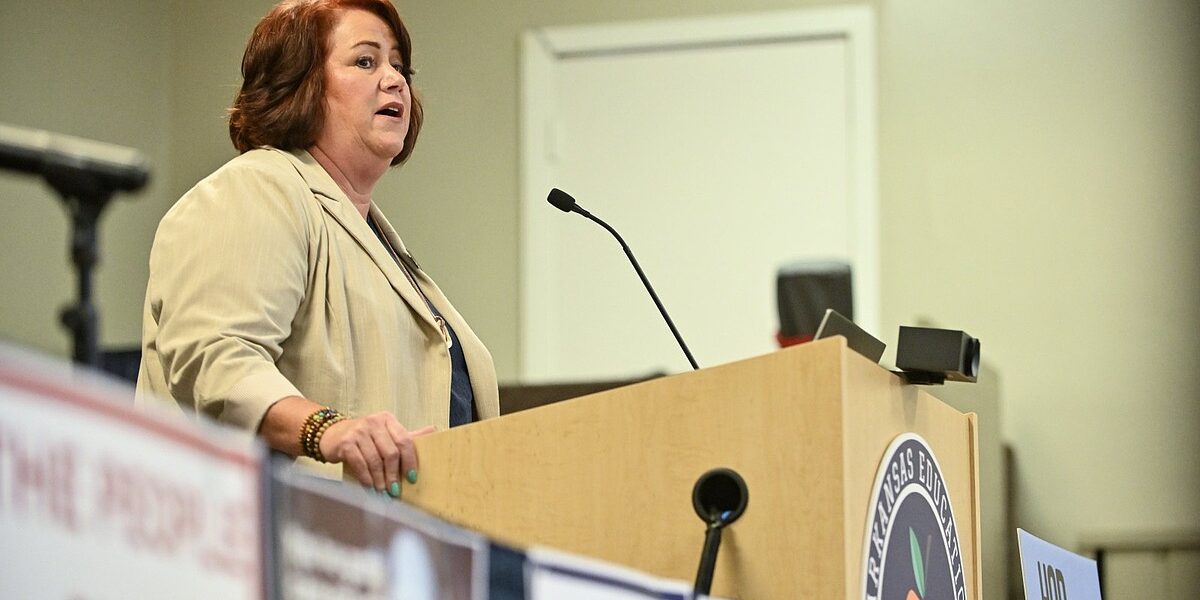
April Reisma, president of the Arkansas Education Association, said Thursday that a summer push will aim to collect the remaining signatures. The effort began in March, with volunteers circulating petitions in public spaces and at community events across the state. Reisma made the announcement at the AEA building in Little Rock during a news conference on May 28.
The first proposal, titled the “Quality Education Amendment,” would require the state to annually appropriate at least the inflation-adjusted amount it spent per pupil in fiscal year 2008. That figure, according to initiative backers, was approximately $7,440 per student — a benchmark not met since the Great Recession. The second initiative, the “Ballot Integrity and Democracy Enhancement Amendment,” would shorten the time required to gather petition signatures from 18 months to six months, and reduce the number of signatures needed from 10% to 8% of the total votes cast for governor in the previous election.
Both measures must clear multiple legal and procedural hurdles before appearing on the ballot. The Arkansas Secretary of State’s office reviews the language for constitutional sufficiency before signature collection can begin. After that, submitted petitions are subject to verification by county clerks, with a state-level review to follow. Roughly 10% of submitted signatures are typically invalidated due to errors in formatting or residency issues.
Reisma said the education funding initiative has received endorsements from several education advocacy groups, including the Arkansas Federation of Teachers and the Winthrop Rockefeller Institute. “Arkansas has chronically underfunded its public schools for nearly two decades,” she said. “This is not about politics — it’s about meeting our constitutional obligation to provide a quality education for every child.”
The ballot access proposal has drawn support from a coalition of civic organizations, including the League of Women Voters of Arkansas. During a recent presentation to the Northwest Arkansas chapter, the League’s executive director highlighted the difficulty of mounting citizen-led initiatives under current Arkansas law. “The system is stacked against ordinary citizens,” she said. “These changes would make democracy more responsive to the people.”
Opposition is already forming. A group of state lawmakers and business leaders, calling themselves “Arkansas for Responsible Governance,” said last week they would oppose both initiatives. They argue that mandating increased education spending could strain other state priorities and that loosening ballot access rules could lead to voter confusion or abuse.
In Northwest Arkansas, where public education funding varies significantly between districts, the proposals have drawn mixed reactions. Springdale school officials said the funding measure could provide a stable revenue stream for districts with high percentages of low-income students. Others, including some Benton County commissioners, have expressed concern about the fiscal impact on local budgets.
Volunteers are collecting signatures through mid-July. Training sessions for petition circulators are being held weekly in Fayetteville, Bentonville, and Rogers. Information on how to participate is available through the AEA website and local chapters of the League of Women Voters.
Source: NWA Democrat Gazette