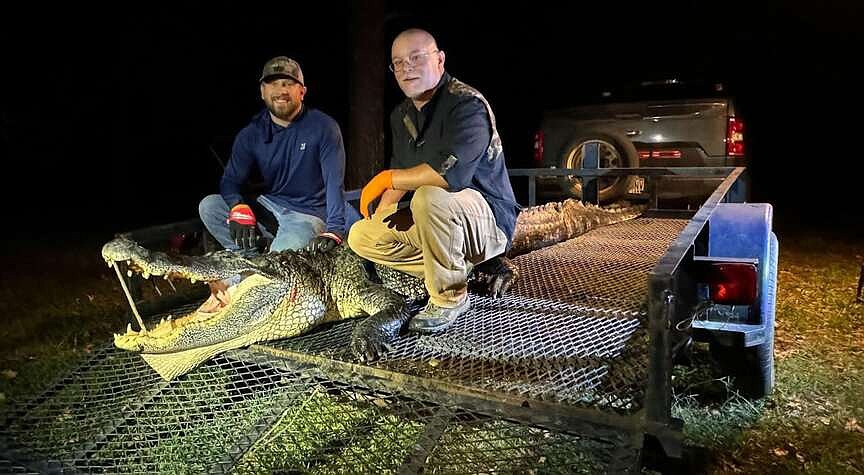
The Arkansas Game and Fish Commission is kicking off a pilot program aimed at helping landowners in the state’s alligator country manage nuisance alligators, while also giving hunters a chance to draw public alligator hunting permits. Landowners can enroll their properties in the program through June 22, allowing public hunters to remove problematic alligators under a regulated system.
In Arkansas, alligators are mainly found in the southern parts of the state, especially around Millwood Lake and other wetlands. While the presence of these reptiles is part of the natural ecosystem, some landowners living near waterways or swampy areas find themselves dealing with alligators more frequently than they want to. For those who don’t want to hunt alligators themselves or handle the complexities of short-term hunting leases under existing private land quotas, this pilot program offers a new alternative.
“Some landowners in south Arkansas live in areas where there are alligators on their property,” explained Amanda Bryant, Herpetologist for the Arkansas Game and Fish Commission. “They may not want to hunt the alligators themselves or want to deal with short-term hunting leases with the quota hunt instituted on private lands.” This initiative connects those landowners with hunters who are eager to draw one of the state’s coveted public alligator hunting permits, enabling respectful and lawful removal of nuisance alligators.
Hunters selected in the public land drawing will be able to access enrolled properties to hunt alligators, helping reduce conflicts between humans and alligators while also supporting the state’s wildlife management goals. The program helps ensure that alligator hunting is conducted safely and sustainably, benefiting both the animals and the people living near them.
The timing is right for such a program. Last year, Cody Gourley and his uncle Jason Mitchell made news with the largest alligator harvest of the 2024 season—a hefty 12-foot, 6-inch gator taken from Millwood Lake. Stories like these show the continuing interest and skill among Arkansas hunters for alligator hunting when permits are available.
While this pilot program targets landowners in the southern parts of Arkansas where the alligator population is established, its structure might serve as a model for managing wildlife conflicts with other large species in the state. Similar approaches have been considered for deer and wild hog control in Northwest Arkansas and Benton County, though none with the intensity or public interest that alligators generate.
The balance between wildlife conservation and private property concerns is a frequent topic in Arkansas. This program provides a middle ground where landowners neither have to become hunters themselves nor engage in complicated lease agreements, while the hunting community gains more access to well-managed public hunting opportunities.
For those outside the alligator range, this might sound unusual — alligator hunting and nuisance removal is rare in Bentonville or Fayetteville, after all. But the state’s Game and Fish Commission has shown it’s willing to pilot programs responsive to the unique needs of different regions, as it also recently did with other controlled hunt and outreach programs.
The enrollment window closes June 22, which means landowners interested in registering their property should act quickly. Once registered, property owners can connect with hunters through the Arkansas Game and Fish Commission’s public land hunts system. This approach keeps the process transparent and regulated, ensuring that both landowners and hunters understand their rights and responsibilities.
The Arkansas Game and Fish Commission continues to oversee the state’s fish and wildlife resources with a focus on sustainability, recreation, and public safety. This pilot program is another effort to align the interests of landowners, hunters, and wildlife management in the region. For southern Arkansas landowners, it may well be a much-needed tool to ease the challenges alligators can present when they wander too close for comfort.
Source: NWA Democrat Gazette