Arkansas was home to several prisoner of war (POW) camps during World War II, housing thousands of German and Italian soldiers from 1943 onward. The camps were established as part of a broader effort by the United States to manage the large number of Axis prisoners brought to American soil for the first time since the Civil War.
By 1943, Arkansas had become a significant location for POW internment, receiving the first wave of about 23,000 German and Italian prisoners. These soldiers were held not only in main military installations but also in branch camps scattered throughout the state. They lived and worked under guarded conditions, contributing labor at the facilities that housed them.
The presence of these camps in Arkansas came after the British, overwhelmed with their own POW populations, requested help from the United States to alleviate housing challenges. Initially, the U.S. government was reluctant to allow POW camps on domestic soil due to concerns about managing large prisoner populations and the military’s lack of experience and manpower to maintain such facilities.
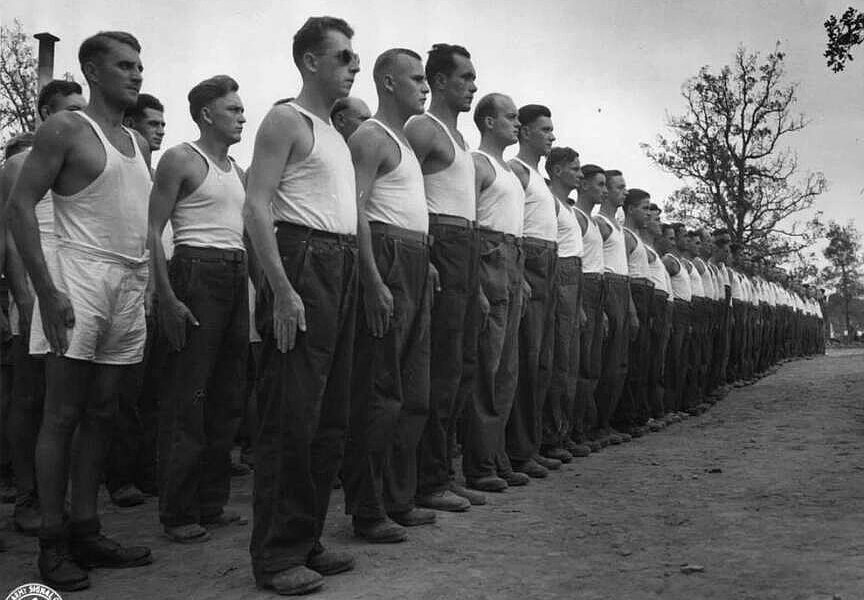
Camp Robinson in North Little Rock was one of the key sites where German prisoners were held during this period. Historic photos from the era show POWs standing at attention under military supervision, a stark reminder of the unusual wartime reality in Arkansas and the nation. The camps operated under military oversight, employing POW labor in ways that supported the war effort while maintaining strict security protocols.
It’s honestly surprising today to realize that thousands of enemy soldiers lived and worked on Arkansas soil during the war. This aspect of local history often gets overlooked, but it’s part of the broader wartime American home front experience. The POWs filling these camps were mostly German and Italian soldiers captured overseas, and relocating them here eased the burden on Britain and other Allied nations.
Maintaining such camps presented a logistical challenge. The military had never operated at such a scale with POW populations, especially inside U.S. borders. The shortage of skilled personnel and manpower meant the armed forces had to quickly adapt to the new demands of guarding, housing, and managing thousands of prisoners. This was all happening while the United States was mobilizing an unprecedented global war effort on multiple fronts.
Though the camps are long closed, their legacy remains part of Arkansas’s World War II story. The fact that thousands of POWs worked in military installations across the state is a reminder of how the war touched even places far from the beaches of Normandy or the Pacific islands, blending global conflict with local realities.
For Northwest Arkansas, understanding this history adds depth to the military and cultural heritage that still shapes the region. Military installations during WWII were economic hubs, and today their presence has influenced growth and development in ways some residents might not expect, including in life and work patterns rooted back to those years.
When you think about it, housing 23,000 prisoners would have been a major undertaking anywhere in the country, but it’s striking how Arkansas stepped into this role. Looking at today’s NWA, with its booming economy and growing population, it’s a reminder of how this place has long been part of wider national and even international events. Managing POW camps was no small feat, and no doubt it required the kind of local cooperation and federal effort that laid groundwork for the region’s future growth.
So next time you’re driving through North Little Rock or hear about military history from the era, remember this lesser-known chapter. Decades before Bentonville became the Walmart headquarters or the Razorbacks drew crowds to Fayetteville, Arkansas was hosting thousands of captured soldiers, balancing community life with a complex, international wartime scenario few would have predicted.
Source: NWA Democrat Gazette