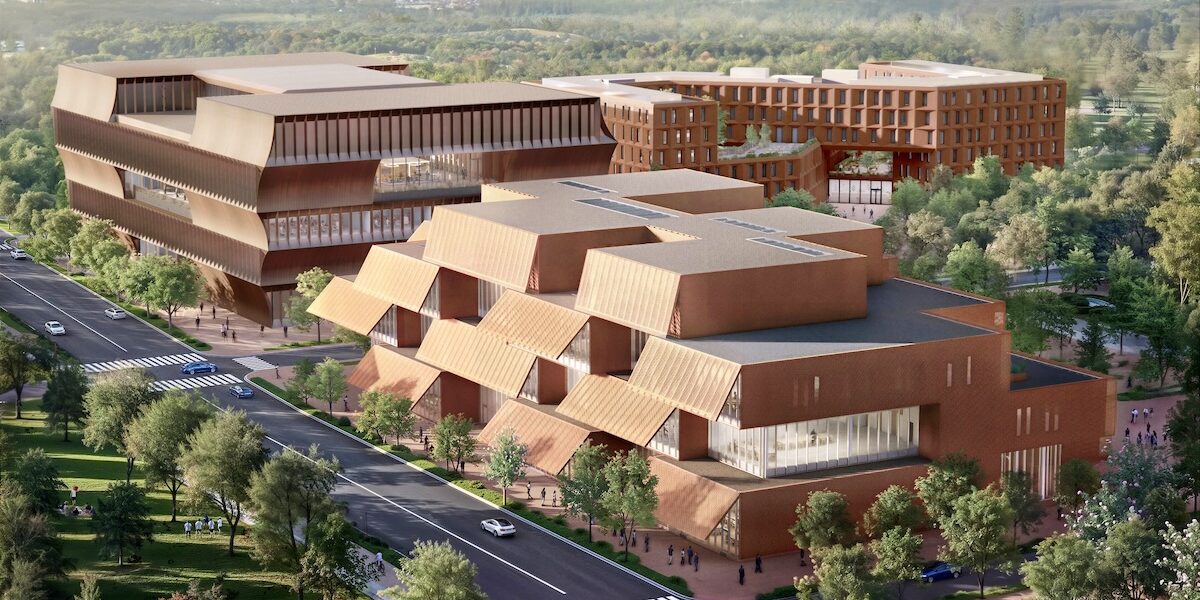
The Walton family and more than 200 attendees gathered Friday, Oct. 2, to break ground on the approximately 444,000-square-foot Bentonville Institute of Technology. The new facility will be located at the former Walmart Home Office campus in Bentonville, signaling a major expansion of educational and innovation infrastructure in the city.
Plans for the Bentonville Institute of Technology include state-of-the-art lab spaces, collaborative classrooms, and dedicated areas for research and development. The building’s large footprint reflects a substantial investment in technology-focused education and workforce training tailored to Northwest Arkansas’ growing tech sector.
The institute aims to connect students, entrepreneurs, and established businesses with the resources and skills necessary to thrive in an evolving economy. The project represents a continuation of the Walton family’s commitment to supporting education and economic growth in Bentonville and the surrounding region.
Located on land once part of Walmart’s corporate campus, the institute leverages a familiar address while transforming the space for cutting-edge learning and innovation. The site’s central location in Bentonville will make it accessible to students from across Northwest Arkansas, encouraging broad community participation.
At the ceremony, members of the Walton family emphasized the importance of providing access to technical education that prepares students for 21st-century careers. The institute will focus on fields such as cybersecurity, software development, data science, and advanced manufacturing technologies, all aligned with local industry demands.
The institute’s opening is expected to complement existing educational institutions in Bentonville, including the University of Arkansas and Northwest Arkansas Community College, by offering specialized programs and partnerships with industry leaders.
Alongside the academic components, the facility will host incubator spaces designed to cultivate startups and attract tech innovators to the region. This integration of education and enterprise aims to foster a pipeline of skilled workers and entrepreneurs who contribute directly to Northwest Arkansas’ economy.
Construction on the Bentonville Institute of Technology marks a significant milestone in the city’s development strategy, reinforcing Bentonville’s position not only as a retail and distribution hub but also as a center for technology and innovation.
This development is part of a broader trend in the region, where infrastructure improvements and new facilities are meeting the needs of a diverse, evolving population. With the addition of the Bentonville Institute of Technology, the city expects to see increased opportunities for residents at all skill levels, from high school graduates seeking career training to experienced professionals expanding their expertise.
Ahead of its anticipated completion, the institute’s programming will be developed in collaboration with local businesses and educators to ensure relevance and responsiveness to workforce needs. This pragmatic approach will help bridge the gap between education and employment, giving students hands-on experience and direct pathways to job opportunities.
The groundbreaking came amid heightened activity across Bentonville, including ongoing parks improvements, trail connections, and community events designed to enhance quality of life. Residents may find new reasons to engage with their city as it expands both recreational and educational offerings.
By embedding technology education into Bentonville’s fabric, the institute demonstrates a commitment to future-proofing the local economy and supporting residents through accessible training and career development. This initiative is expected to generate economic growth while contributing to a more inclusive and skilled workforce.
Industry observers and local leaders alike are watching closely as Bentonville reshapes its identity with investments like the Bentonville Institute of Technology. The project embodies a focused effort to nurture homegrown talent and attract external innovators, keeping pace with national trends in technology and workforce development.
Source: Talk Business & Politics