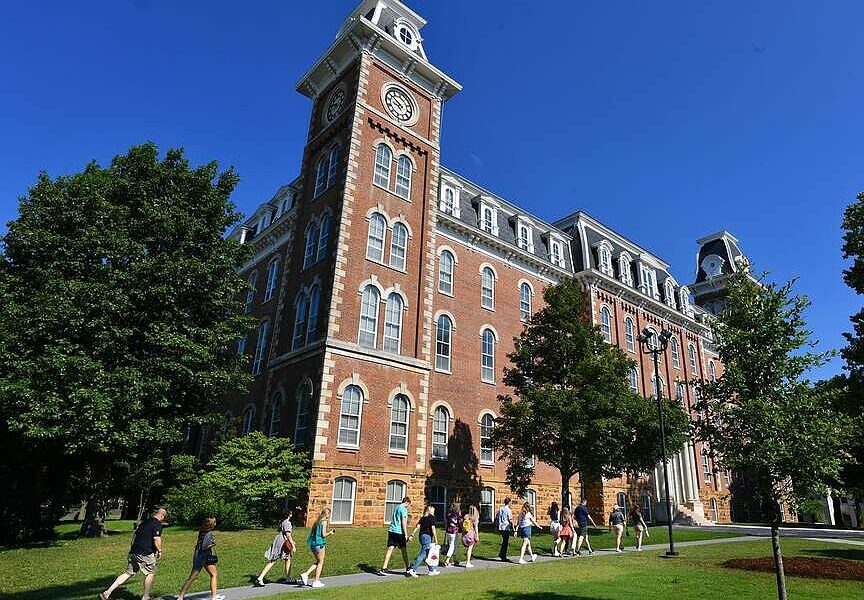
The University of Arkansas will receive $1.95 million from the National Institutes of Health over the next five years to expand its biomedical research program for undergraduates. This funding aims to offer hands-on research experience to students from across the state, strengthening Arkansas’s role in biomedical innovation.
The federal grant supports a program that has been giving undergraduates at the university and other Arkansas schools the chance to conduct real biomedical research in labs. It also covers an annual conference hosted by the university, where these students can present their findings and connect with researchers and peers.
Feng Wang, a professor of chemistry and biochemistry at the University of Arkansas and the project leader for the outreach program, highlighted the importance of early exposure to medical research. “We don’t need a lot of persuasion to convince people to go to medical school,” Wang said. The program’s focus is on preparing students better for careers in biomedical sciences by giving them tangible research experiences before they even graduate.
Honestly, this kind of investment in undergraduate research is a big deal. Other major research universities in bigger metropolitan areas spend much more on similar programs, but here in Fayetteville—the state’s flagship higher education institution—this grant will have an outsized effect. Hands-on training like this can be a launching pad for students’ careers in medicine, pharmaceuticals, or biotech sectors, which are only just beginning to bloom locally.
It’s worth noting this program is part of a broader push to elevate STEM fields in Arkansas. By styling undergrad research with support from national funders, the university is positioning the region to develop a workforce skilled in increasingly vital scientific areas. This kind of sustained federal support also indirectly helps keep talented young people in Northwest Arkansas rather than losing them to coastal research hubs.
Wang and his team have been running this outreach for several years now. The goal is simple but powerful: provide meaningful research opportunities that are often unavailable at smaller or less-funded institutions around the state. For many students, access to such experiences can be a game-changer in their career trajectory—far from a flashy corporate announcement, it’s quietly building the kind of local talent pipeline that can fuel economic growth.
This funding also directly benefits the university community by supporting the annual undergraduate research conference. This event serves as a platform for students to showcase their work and network with professionals, adding a layer of professional development that’s often missing from undergrad curriculum in less research-intensive regions.
For Northwest Arkansas residents considering higher education options, this funding underscores why the University of Arkansas remains a serious place to get involved in cutting-edge biomedical science without leaving the region. That’s the kind of opportunity rarely affordable or accessible in larger cities without crushing tuition or intense competition. Here, students get to train locally and compete nationally.
When you look at what $1.95 million means over five years, it breaks down to about $390,000 a year focused on undergraduate engagement. In larger cities, that might just cover one lab’s overhead. In Fayetteville, it helps build entire programs that touch dozens of students annually, giving them the kinds of research experiences you’d expect only at major medical schools.
Programs like this also bolster the university’s reputation beyond Arkansas, making it easier to attract research grants, faculty talent, and partnerships in the biomedical field. This could have ripple effects in the local job market as well, with graduates more prepared to join biotech companies or contribute to health innovation startups that could sprout in Northwest Arkansas.
This announcement follows several other positive developments in local economic and educational investment—like recent talks about regional infrastructure improvements and cultural events drawing attention to NWA’s growing prominence. It’s exciting to see concrete dollars flow into projects that reflect the community’s ambitions, not just corporate interests.
For students and families in Northwest Arkansas aiming to dive into biomedical research, this grant means more labs to fight diseases, more mentors for young scientists, and more chances to turn curiosity into careers. It’s a reminder that big-city opportunities aren’t the only ones worth chasing—sometimes the best research experience happens right here.
Source: NWA Democrat Gazette