The University of Arkansas in Fayetteville officially opened the door Friday for applications to lead one of the state’s newest and largest academic investments, announcing the formation of a search committee and the hiring of an outside firm to find the next director of the Institute for Integrative and Innovative Research.
Honestly, stepping back and looking at what the University of Arkansas has done with this building and this project, it feels like something out of a dense corporate hub like maybe Austin or Denver. But here it is, right here in Northwest Arkansas, quietly building one of the most unique research environments in the entire country.
Building on a massive footprint
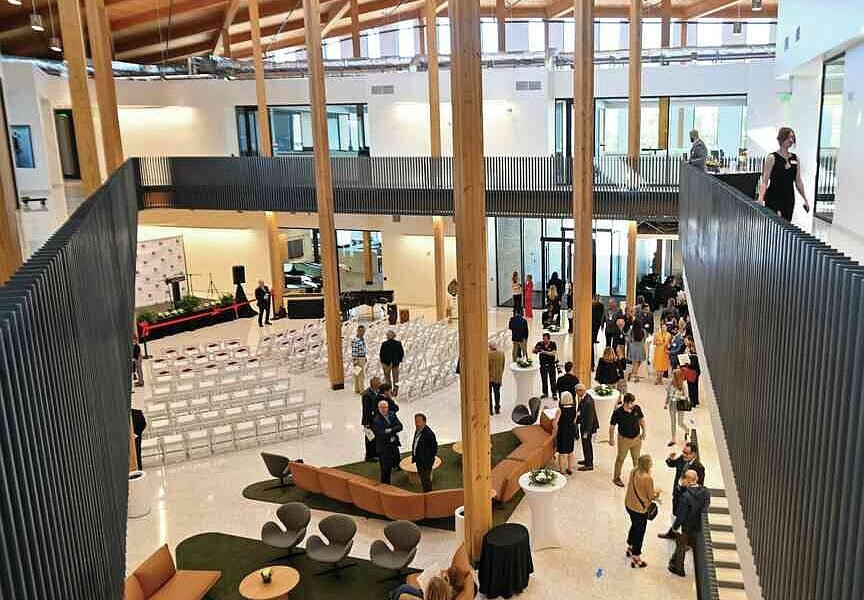
The institute, commonly known as I³R, recently moved into a massive new home. The building, a state-of-the-art space that opened to the public in April 2025, spans 144,000 square feet. If you tried to build that kind of collaboration space in a major coastal city, the real estate costs alone would spin heads.
It sits on the University of Arkansas campus, but the vibe inside is distinctly different from a traditional classroom. It’s a place designed to knock down walls—literally and figuratively. The institute focuses on solving real-world problems, specifically those that affect health and well-being, with a heavy emphasis on Arkansas and its rural communities.
The people running this place now—immediately after that grand opening mix in April—are tasked with ensuring the building buzzes with the kind of collaborative energy the designers intended.
Why this matters for the Health of the State
Look, research can seem abstract. You read a headline about metabolic health or food systems and move on with your day. But I³R is looking at the daily lives of Arkansans. They are digging into chronic disease and metabolic health, which affects families everywhere from the Delta to the River Valley. They are also focusing on food systems and nutrition, trying to figure out how we eat better and how our local food supply chain helps us stay healthy.
Connecting 144,000 square feet of wet lab space, dry lab space, and open collaboration areas to actual Arkansans is a tall order. It
Source: NWA Democrat Gazette