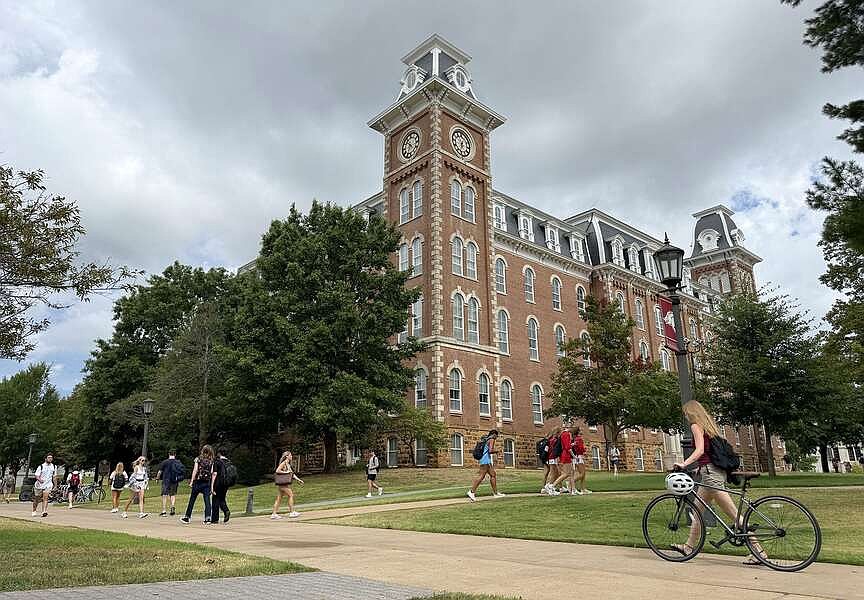
The University of Arkansas in Fayetteville announced Thursday that its six-year graduation rate for the freshman class of 2020 reached a record 73.07%, marking a 2.17 percentage point increase from the 70.9% rate of the previous year’s cohort. This represents the largest year-over-year gain in the six-year graduation rate in five years, according to a university news release.
In addition to the six-year metric, the university reported a record high four-year graduation rate for the freshman class of 2022 at 62.22%. This figure is up 4.13 percentage points from 58.09% in 2021. The university noted that each 1% increase in graduation rates represents roughly 70 additional students earning their degrees within the designated timeframe.
The six-year graduation rate is a key measure used nationally to assess the effectiveness of four-year public research universities like the University of Arkansas. A rate above 70% places the institution well ahead of many peer schools in the region and signals steady progress in student retention and degree completion strategies.
For context, the University of Arkansas has steadily improved its graduation outcomes over the past decade as it expanded academic support services and enhanced student engagement efforts. The gains reported this year continue a trend that city and campus officials have highlighted as critical to fulfilling the university’s mission to provide accessible, high-quality education to a growing student population.
These improvements have significant implications for Northwest Arkansas, where the university is not only the largest public institution of higher learning but also a major economic driver. Higher graduation rates translate into a better-prepared workforce, which supports local employers and contributes to the region’s competitiveness.
Enrollment data show that the university continues to attract a diverse student body from across Arkansas and beyond, helping to meet workforce needs in sectors such as business, education, engineering, and the health sciences. The university’s sustained focus on improving degree completion aligns with state education goals aimed at increasing the proportion of Arkansans with postsecondary credentials to meet labor market demands.
University leadership attributes these graduation rate gains to various initiatives, including expanded academic advising, targeted tutoring programs, and investments in financial aid. Efforts to address barriers to student success—such as cost, mental health resources, and career counseling—also appear to be contributing to improved outcomes.
Local education experts point to the graduation rate increases as evidence of the university’s growing role in supporting regional development. “Graduation rates are not just numbers; they reflect the ability of the university to prepare students for meaningful careers and community leadership,” said a Northwest Arkansas education analyst familiar with higher education data.
The university’s updated graduation statistics arrive as Fayetteville prepares for the fall semester, which began on August 17, with final exams scheduled to start December 7. Growing retention and completion rates may influence future enrollment trends, scholarship allocations, and program development on campus.
The University of Arkansas, Fayetteville’s progress contrasts with national graduation rates, where many public universities struggle to maintain or improve four- and six-year completion metrics. According to the National Center for Education Statistics, the average six-year graduation rate for first-time, full-time undergraduate students at public institutions is roughly 63%, putting the University of Arkansas notably above this benchmark.
As the university moves forward, it faces challenges related to maintaining growth while managing enrollment sizes, expanding support for underserved populations, and adapting to changing educational needs. State funding levels, infrastructure capacity, and labor market shifts will also impact the institution’s ability to sustain and improve graduation rates.
The recent record graduation rates will likely factor into ongoing discussions about higher education priorities in Arkansas and investments in workforce development. Given the university’s importance to Northwest Arkansas’s economy and community vitality, improved student outcomes benefit not only graduates but the broader region.
Source: NWA Democrat Gazette