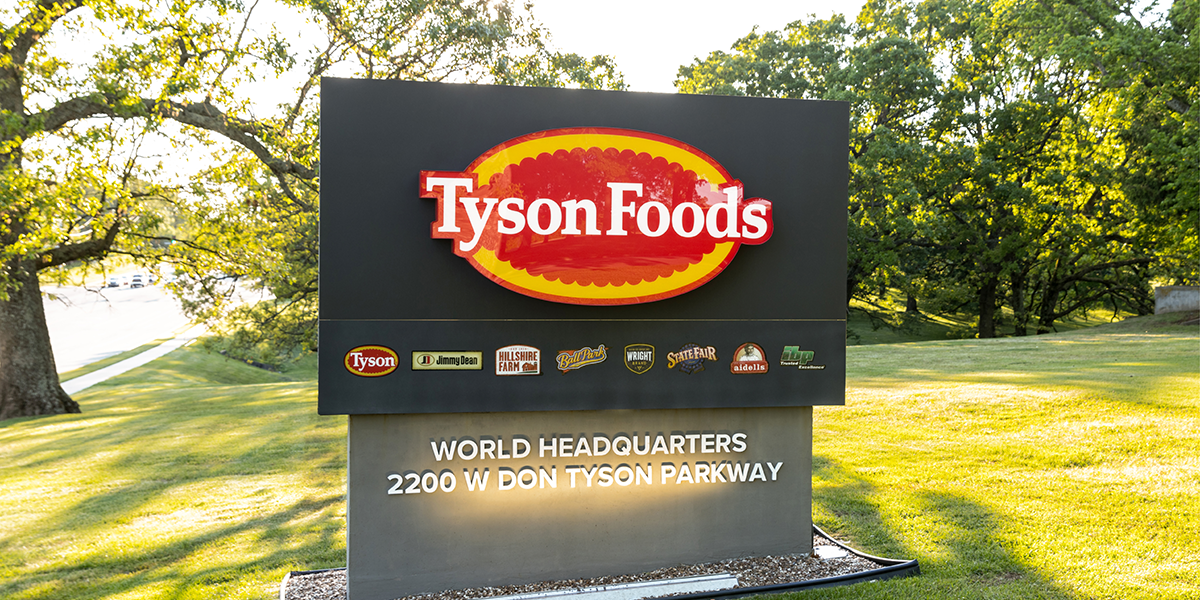
Tyson Foods lowered its financial outlook for 2026 on September 3, citing intensifying pressures in its beef segment, sending its stock down over 7% in early trading. The Springdale-based meat giant pointed to rising costs and challenging market conditions for beef as key factors weighing on its future earnings forecast.
This downgrade comes amid a broader national trend of fluctuating meat prices and shifting consumer demand, but it hits close to home for Northwest Arkansas, where Tyson Foods is one of the largest employers and an economic cornerstone. Investors and employees alike are watching closely as the company adjusts its projections.
Tyson Foods, which operates multiple processing plants and offices throughout Benton and Washington counties, reported that beef-related challenges have become more severe than originally anticipated. While the company didn’t provide exact figures in its revised outlook, the news reflects ongoing cost pressures—such as higher cattle prices and labor expenses—that have squeezed profit margins.
Tyson’s diverse portfolio includes poultry, pork, prepared foods, and beef, but beef historically has higher volatility due to supply constraints and feed costs. The company’s statement suggests that uncertainty in that division will persist into 2026, forcing a more cautious stance on revenues and earnings.
For Northwest Arkansas families, this development carries real implications. Tyson Foods employs thousands locally, providing stable jobs in meatpacking, logistics, and corporate roles. A dimmer growth outlook may temper hiring plans and investment projects in the region, potentially affecting economic vitality.
Still, Tyson’s footprint here runs deep, and past economic challenges have shown local operations’ adaptability. The company has signaled a focus on managing costs while investing in innovation and supply chain efficiency to weather the ups and downs of commodity markets.
Industry watchers note that while Tyson’s beef troubles reflect external market forces—including drought impacts on cattle herds and inflationary wage pressures—the company’s broader strategy may help stabilize performance. Diversification into prepared foods and expanding value-added offerings could offset some beef sector volatility.
Comparing this to other major meat producers nationwide, Tyson’s situation is somewhat typical. Beef production is costly everywhere, but having headquarters and significant infrastructure in Springdale places Tyson at the center of this storm. It’s a reminder that global commodity swings ripple directly into this community’s economy.
Tyson’s revised guidance also echoes caution seen in other parts of the food production industry. Consumers adjusting spending habits, regulatory changes, and supply chain issues all play a role. For a company of Tyson’s scale, recalibrating expectations aims to give investors and stakeholders a realistic view of the year ahead.
While stock market reaction was sharp, the company’s leadership continues to emphasize long-term investment in sustainability and product innovation. Tyson has committed to strategic initiatives that could position it for growth beyond 2026 despite near-term hurdles.
For now, Northwest Arkansas watches as Tyson navigates these beef pressures. The company’s decisions influence local job markets, tax revenues, and the broader business climate. It’s a balancing act between managing immediate challenges and maintaining the steady pulse of an economic engine that’s been central to the region for decades.
Source: Arkansas Business