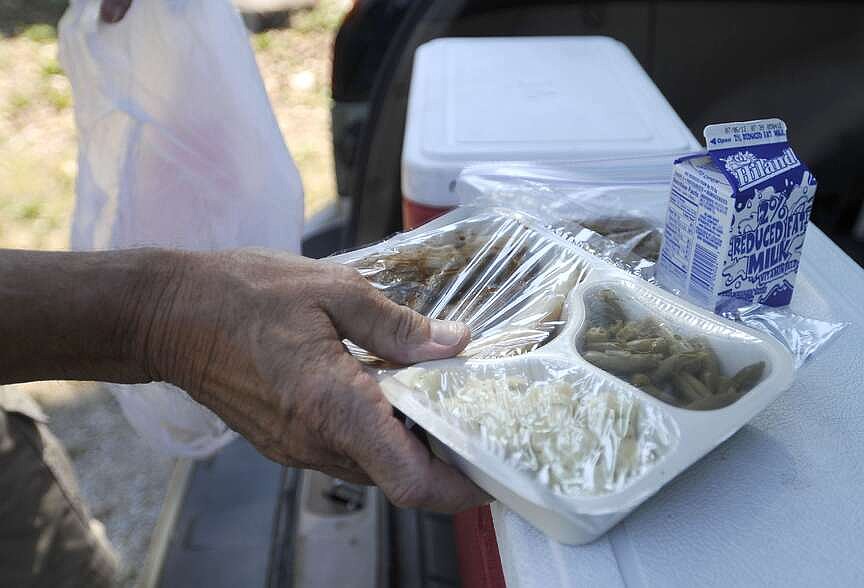
Meals on Wheels of Benton County has shut down after decades of delivering food to homebound residents, the NWA Democrat-Gazette reported this week.
The closure stems from a shortage of volunteers and donors, the newspaper’s editorial board noted. The program, which served elderly and disabled residents who could not shop or cook for themselves, joins a growing list of social services struggling to maintain operations in one of the nation’s wealthiest counties.
Benton County consistently ranks among Arkansas’ most affluent jurisdictions, home to the corporate headquarters of Walmart and Tyson Foods. Yet for all the economic dynamism that defines Northwest Arkansas, thousands of residents still face food insecurity. The Meals on Wheels program served as a critical lifeline for those residents, delivering not just nutrition but regular human contact for people who might otherwise go days without seeing another person.
The organization’s dissolution highlights a persistent challenge in communities experiencing rapid growth: the volunteer infrastructure that supports vulnerable residents often fails to keep pace with population expansion. As housing developments and corporate campuses rise across Benton County, the networks of neighbors caring for neighbors can fray.
Meals on Wheels of Benton County was not a large nonprofit with a professional development staff. It relied on the kind of grassroots commitment that is difficult to sustain—retirees giving their mornings, churches organizing delivery routes, local businesses contributing coolers and fuel. When those volunteers became harder to recruit and donations did not keep up with rising costs, the math became impossible.
The program’s closure leaves a specific gap that will be difficult to fill. Unlike food pantries, which require recipients to travel, Meals on Wheels brought food directly to people who could not leave their homes. For homebound seniors, this was not a convenience—it was the difference between eating and going without.
The NWA Democrat-Gazette’s editorial pointed out that Benton County’s prosperity makes this outcome particularly troubling. The county’s wealth, derived largely from retail and agricultural multinationals, has not translated into a robust support system for residents who fall through the cracks. The editorial board suggested that the companies benefiting from Benton County’s tax base and labor pool bear some responsibility for filling the void left by the program’s collapse.
Other meal delivery services operate in Northwest Arkansas, but capacity constraints mean they cannot automatically absorb the clients served by the Benton County program. Families searching for replacement services will need to navigate a patchwork of nonprofits, each with its own eligibility requirements and waitlists.
The Meals on Wheels closure serves as a reminder that economic development metrics—job creation, GDP growth, new business formation—do not capture everything that makes a community functional. The volunteers who drove delivery routes in Rogers, Bentonville and smaller towns across the county were part of an invisible infrastructure as important as any road or utility. When that infrastructure collapses, the consequences land on those with the fewest alternatives.
Source: NWA Democrat Gazette