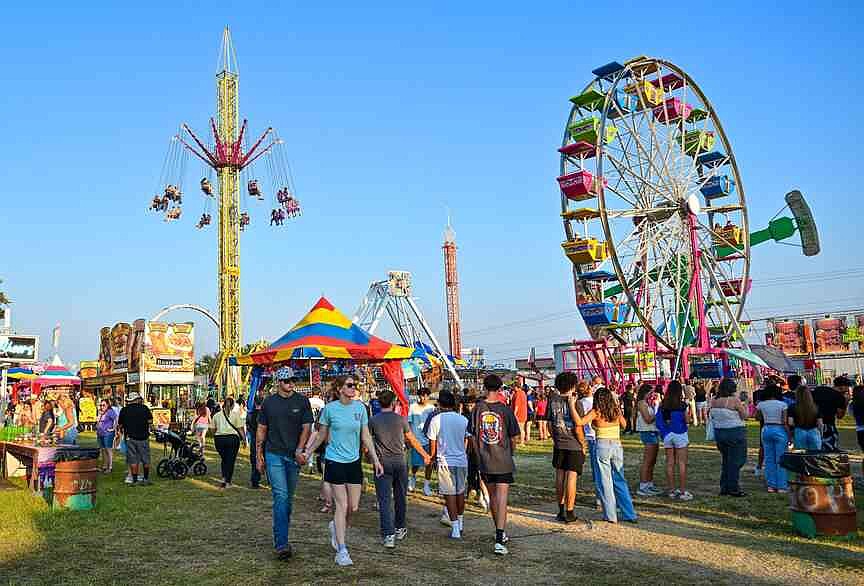
The boycott of the Tontitown Grape Festival stirred conversations across Northwest Arkansas in recent months, but did it make a tangible impact? The festival, known for its rides, food stalls, and live music, drew hundreds to the fairgrounds in August 2025. Yet behind the laughter and music was a quiet debate about the value and consequences of the boycott.
Calls for the boycott arose amid concerns about representation and inclusivity at the festival. Local activists and some community members voiced their intention to stay away, aiming to signal the need for change. But as the festival wrapped up, questions lingered: was the boycott large enough to shift the event’s organizers or the community’s mindset? Or did the festival go on much as it always does, an annual gathering that blends tradition and celebration?
A walk through the grounds on the final day showed a crowd undeterred. Families chased their kids around the fair rides, the smell of fried grape fritters and smoky barbecue filled the air, and the vibrato notes from the main stage mingled with chatter and laughter. The sense of festivity appeared unbroken. Festival-goers, unaware or unmoved by the boycott calls, brought their usual enthusiasm.
Similar to elusive legends like Arkansas’ Fouke Monster or Scotland’s Loch Ness Monster—creatures that continue to spark intrigue despite the lack of definitive proof—the actual effect of the boycott remains hard to measure. Eyewitness accounts, social media posts, and attendance numbers offered mixed signals. While some booths noted quieter sales, others reported no drop-off in business. Festival organizers declined to release exact attendance figures but insisted the event remained “a cornerstone of community celebration.”
Activists behind the boycott acknowledge the difficulty of quantifying their influence. “Change doesn’t always come with clear metrics,” said one local advocate, requesting anonymity to maintain focus on the message rather than the messenger. “It’s about making a statement, turning heads, opening conversations. Maybe next year’s festival will listen a little closer.”
The controversy surrounding the boycott revealed underlying tensions within the community—between preserving traditions and embracing evolving values. Some longtime residents felt the calls to boycott overshadowed a festival that honors Tontitown’s Italian heritage and local farming roots. Others believed the festival must reflect the diversity of modern Northwest Arkansas, beyond grapes and folklore.
To outsiders, this might resemble the ongoing search for mythical creatures—persistent hope for undeniable proof of impact, yet frequently only glimpses of shadows and footprints. The festival’s future shows signs of potential adaptation. Festival board members have expressed openness to new voices and perspectives, though concrete changes have not yet been announced.
Last year’s edition of the Tontitown Grape Festival emphasized community spirit alongside entertainment. Children’s laughter blended with the clink of glasses filled with local wine, while vendors showcased crafts and produce, aligning with the town’s commitment to celebrating agricultural heritage. It was a gathering that resists easy categorization: part street fair, part cultural ritual. The boycott slipped through the festivities like a faint breeze, challenging but not dismantling.
Northwest Arkansas readers familiar with other local traditions may recall how community-led efforts have shaped events such as the Cane Hill Kite Festival or arts programming at The Momentary. In those cases, persistent public engagement brought change gradually, often through dialogue rather than disruption. The conversation sparked by the Tontitown boycott feels similar—an unfolding story of how a region balances preservation and progress.
In the end, the boycott’s purpose may not be to score immediate wins but to unsettle assumptions and invite reflection. For anyone who treasures the sensory delights of the Grape Festival—the sugary aroma of festival doughnuts, the hum of a fiddle, the warmth of a summer evening shared with neighbors—the hope is that these moments continue to feel welcoming to all.
Whether the boycott ultimately reshapes the Tontitown Grape Festival, it clearly marked an inflection point in the community’s evolving dialogue. Like the search for legendary creatures, the outcome remains unseen but not unfelt, inviting ongoing attention and participation from residents who care about the stories their gatherings tell.
Source: NWA Democrat Gazette