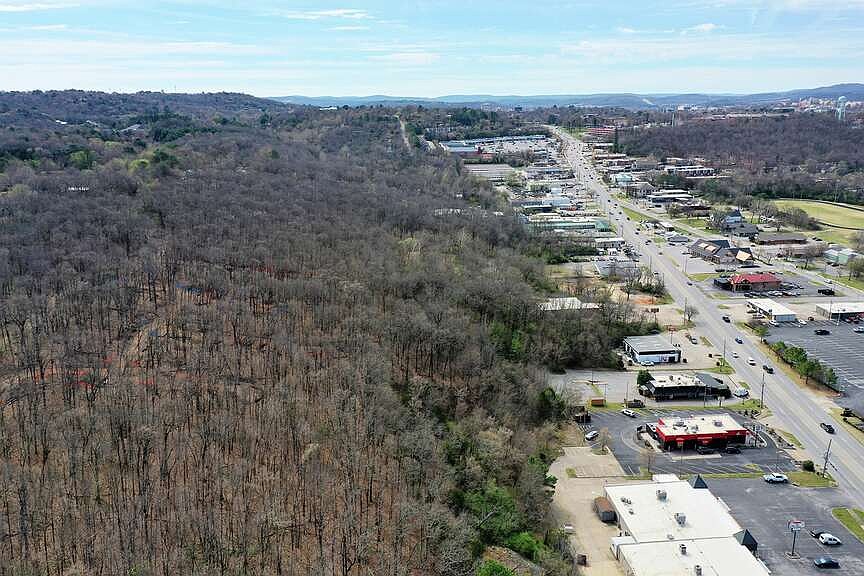
The Fayetteville School Board’s plan to build a new Ramay Junior High School on a hillside by College Avenue comes with a price tag north of $117 million. That figure confirms early warnings from project opponents that the cost would exceed initial estimates presented to taxpayers.
The proposed school would cover 150,000 square feet, designed to accommodate Fayetteville’s student growth. But the challenging topography of the site drives up both construction and infrastructure expenses compared to a flatter, less complex location.
Critics feared the hillside site would escalate costs due to increased grading, foundation work, and road access improvements. Their concerns now seem justified given the latest financial outlook. While the Board initially presented a more conservative budget, new assessments have pushed the price into triple digits, a heavy lift for local taxpayers.
In a region like Northwest Arkansas, $117 million to build a junior high is staggering. For context, districts in bigger cities might stretch to this level for a high school or a major vocational campus. Fayetteville’s decision reflects the desire to create a landmark facility but comes at steep economic consequences.
The debate over balancing educational needs with taxpayer impact strikes a familiar chord in NWA communities already stretched by rapid growth and infrastructure demands. Neighbors and advocates for better schools understand the importance of investing in quality facilities — but many also watch budgets tighten with caution.
The location choice highlights the tension between available land and site suitability amid Fayetteville’s expanding footprint. Hillside construction can deliver dramatic views and architectural interest but often requires costly engineering solutions. As the bill mounts, that tradeoff becomes more evident, prompting questions about future site selections in the district and region.
Some community members point to alternative sites closer to major roads or in flatter areas that might have saved millions. Others argue the hillside setting offers unique educational and community benefits worth the premium. The Fayetteville School Board has stood by its plan, emphasizing long-term capacity and design considerations.
Installing a 150,000-square-foot junior high capable of serving Fayetteville’s growing youth population is an undeniable necessity, but $117 million is a hefty commitment. This number includes not just construction but infrastructure, parking, landscaping, and other essentials scaled for a campus of this size and complexity.
Looking beyond Fayetteville, similar-sized new schools in comparable-growth cities have often been completed for tens of millions less, though site conditions vary widely. It’s a reminder that the local geology and planning choices profoundly influence public project costs here in Northwest Arkansas.
As Fayetteville moves forward with bond measures and community discussions, taxpayers will want clarity on how these costs impact property taxes and what measures might help contain future overruns. Transparency and ongoing communication will be critical to maintaining public trust in a project that shapes the district’s educational landscape for decades.
Building a substantial junior high on a hillside sounds visionary—and it is—but with an eye-popping $117 million price tag, Fayetteville now faces the challenge of turning that vision into sustainable reality without overwhelming the community’s financial capacity.
Source: NWA Democrat Gazette