Researchers in Northwest Arkansas and the River Valley have secured a combined $5.3 million in grants from the National Institutes of Health to explore how the body reacts to stress and exercise, with potential implications for weight management and chronic disease treatment.
The University of Arkansas in Fayetteville and the Arkansas Colleges of Health Education in Fort Smith announced the awards, which support interdisciplinary studies into cellular stress responses and physiological effects related to weight loss.
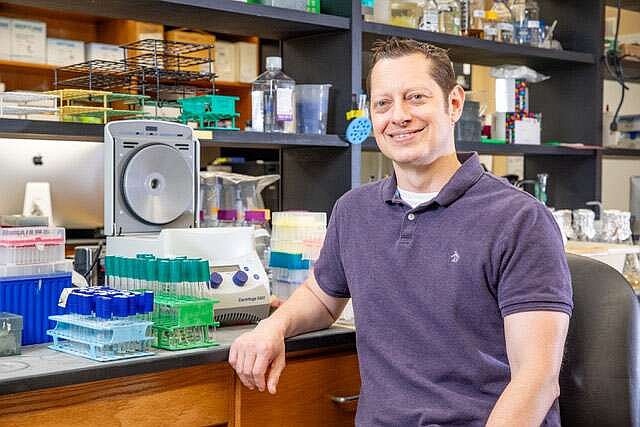
At the University of Arkansas, Jeffrey Lewis, associate professor of biological sciences, received $2 million to investigate variability in how individual cells respond to stress. Lewis’ lab focuses on understanding the regulatory networks that activate stress-defense genes, which help cells maintain homeostasis—a state of internal balance essential for health.
“Our work aims to decipher the mechanisms that allow cells to adapt to different forms of stress,” Lewis said in the university’s release. “Understanding these pathways could eventually lead to novel therapies for diseases where cellular stress plays a key role.”
In the River Valley region, the Arkansas Colleges of Health Education is applying grant funding to study the physiological impacts of exercise-related stress and its relationship to weight loss. Specific details about project leaders and grant amounts there were not disclosed in the announcement.
The grants reflect continued federal investment in biomedical research across Arkansas, bolstering institutions outside the traditional hubs of Little Rock or its immediate metro. The University of Arkansas already plays a central role in research development in the region, and this funding further cements its growing profile in cell biology and integrative health sciences.
Cellular stress responses, including those triggered by exercise, are a fundamental aspect of how the body regulates energy balance and function. Disruptions in these processes contribute to chronic conditions such as obesity, diabetes, and cardiovascular disease, all of which have notable prevalence rates in Arkansas.
By studying these mechanisms closely, researchers hope to identify new interventions that can improve health outcomes for people facing these challenges.
This investment complements other recent regional research initiatives, including economic development grants and health innovation projects, underscoring the state’s expanding capacity for advanced scientific work.
Source: NWA Democrat Gazette