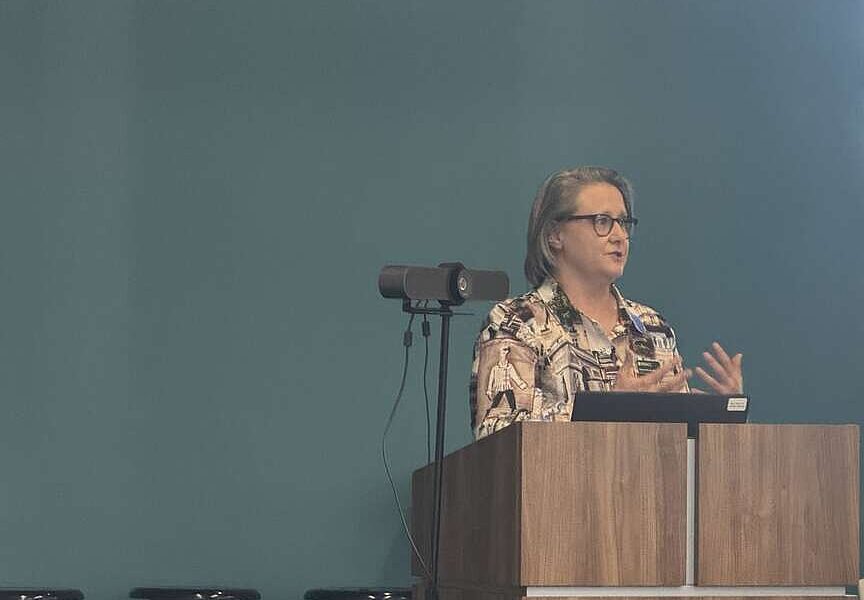
Northwest Arkansas Community College (NWACC) trustees met Monday in Springdale to review and prepare priorities for the upcoming Arkansas legislative session, focusing on funding adjustments and program guidelines aimed at expanding the college’s educational reach and resources.
During the meeting, college officials outlined key objectives they intend to champion at the state level, including increased funding for workforce training programs and calls for legislative flexibility to better align with community needs. Trustees examined how changes in state support could affect NWACC’s capacity to serve its diverse student body, which includes traditional students, adult learners, and those seeking technical certifications.
Stephanie Lewis, a college representative, discussed how faculty and staff have been leveraging sabbaticals and special projects, such as documentary filmmaking, to enrich the educational environment and student engagement. While this showcased NWACC’s commitment to innovative teaching methods, trustees emphasized the necessity of stable funding and supportive legislation to sustain such initiatives broadly.
As Arkansas budgets are finalized, NWACC officials are seeking to influence decisions that will allow the college to expand program offerings, particularly in fields critical to Northwest Arkansas’s economy, including advanced manufacturing, health sciences, and information technology. Increased state financial support would also address rising operational costs and enhance student services such as tutoring, career counseling, and mental health resources.
The meeting took place against a backdrop of broader regional efforts to support economic development through education. Northwest Arkansas has seen sustained growth in sectors like retail, logistics, and technology, increasing demand for a skilled workforce. NWACC’s legislative agenda reflects a strategic effort to position the college as a primary conduit for workforce development, which directly impacts local employers and residents seeking career advancement.
Trustees also reviewed recent community engagement efforts and discussed the college’s demographic trends, highlighting an increase in non-traditional students and those pursuing certificate programs. This shift has prompted calls for legislative changes to funding formulas, enabling NWACC to allocate resources more effectively toward short-term credential programs that meet immediate labor market needs.
Legislators are expected to address higher education funding this spring, and NWACC’s advocacy aims to ensure that community colleges receive equitable consideration alongside four-year institutions. This includes proposals to modify funding guidelines that currently restrict how colleges can use state dollars for workforce training and partnerships with local industries.
The college’s leadership stressed the importance of these legislative efforts not only for NWACC but for the broader Northwest Arkansas region, where workforce shortages and skills gaps remain challenges for businesses across multiple sectors. By adjusting funding structures and program requirements, NWACC hopes to enhance its capacity to deliver training that is responsive to evolving economic conditions.
Trustees plan to continue engaging with state representatives and regional stakeholders as the legislative session approaches, presenting data and community input to underscore NWACC’s role in the state’s education and workforce system. The meeting reflected a focused strategy on aligning college priorities with legislative opportunities to secure the resources necessary for student success and regional economic vitality.
Source: NWA Democrat Gazette