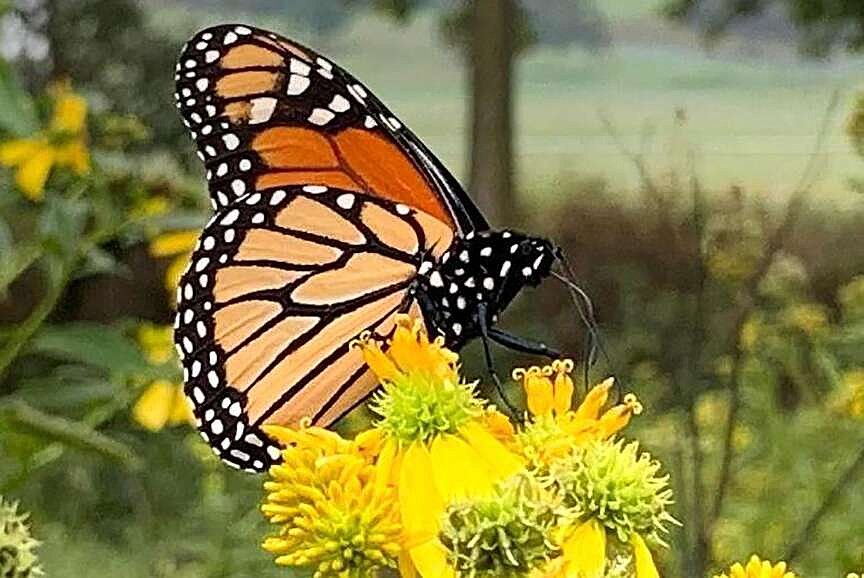
Monarch butterflies were spotted resting on wildflowers at River Commons West Side in Fayetteville during a September 27 field trip organized by the Northwest Arkansas Audubon Society. Phyllis Kane, a Fayetteville resident, captured a photograph of one monarch butterfly perched delicately on a bloom, with several others seen fluttering nearby.
River Commons West Side, a natural area along the White River, has quietly become a noteworthy stop for monarch enthusiasts this fall as the migratory butterflies pass through Northwest Arkansas. The site’s mix of native wildflowers and open space provides essential nectar sources, which monarchs need during their long journey south.
Kane’s photo highlights the delicate orange-and-black wings of the monarch, a species well-known for its seasonal migration that covers thousands of miles from Canada and the northern United States to overwintering sites in Mexico. The appearance of several monarchs together at River Commons West Side underscores the area’s importance as a rest and refueling point within Benton County.
The field trip led by the Northwest Arkansas Audubon Society drew local bird watchers and nature lovers who often turn their binoculars toward avian species but are equally captivated by the region’s insect visitors. While monarchs aren’t birds, their presence during the fall migration period adds richness to the bird-centric outings and reminds participants of the interconnectedness in local ecosystems.
Throughout the day, the group observed not only monarchs but also other insects and flora that characterize the fall landscape of River Commons. The area has seen a resurgence in native plant growth in recent years, partly thanks to restoration efforts by local volunteers and naturalists focused on preserving pollinator habitats.
Monarch butterflies face numerous challenges from habitat loss and climate change, making local stops like River Commons West Side critical for their survival. In NWA, residents may notice an uptick in monarch sightings during September and October as these butterflies gather energy before continuing their trek.
During the field trip, participants discussed the lifecycle of monarchs and the threats they encounter. Milkweed, the only plant their caterpillars feed on, is crucial along migratory routes. The wildflowers in River Commons include milkweed among other flowering plants, offering the nectar adult monarchs rely on. Conserving and planting native species in yards and public spaces can support these butterflies and other pollinators year-round.
Monarch migration is a natural spectacle familiar to longtime Fayetteville residents but often overlooked in the rush of fall school and holiday schedules. The Northwest Arkansas Audubon Society’s outings provide an accessible way to slow down and appreciate these small travelers passing through Benton County’s backyards and greenspaces.
The society plans additional outings focused on pollinators and native plants throughout the remainder of 2026. These events aim to educate and engage the community in local conservation efforts. For those who couldn’t join the September field trip, the society’s website and newsletters offer resources on how to help monarchs and other pollinators.
As the Walmart corporate campus and surrounding development continue shaping Fayetteville’s landscape, natural areas like River Commons West Side offer vital refuges for wildlife. Monarchs’ appearance here is a reminder of the pace of nature existing alongside Northwest Arkansas’ growth.
Source: NWA Democrat Gazette