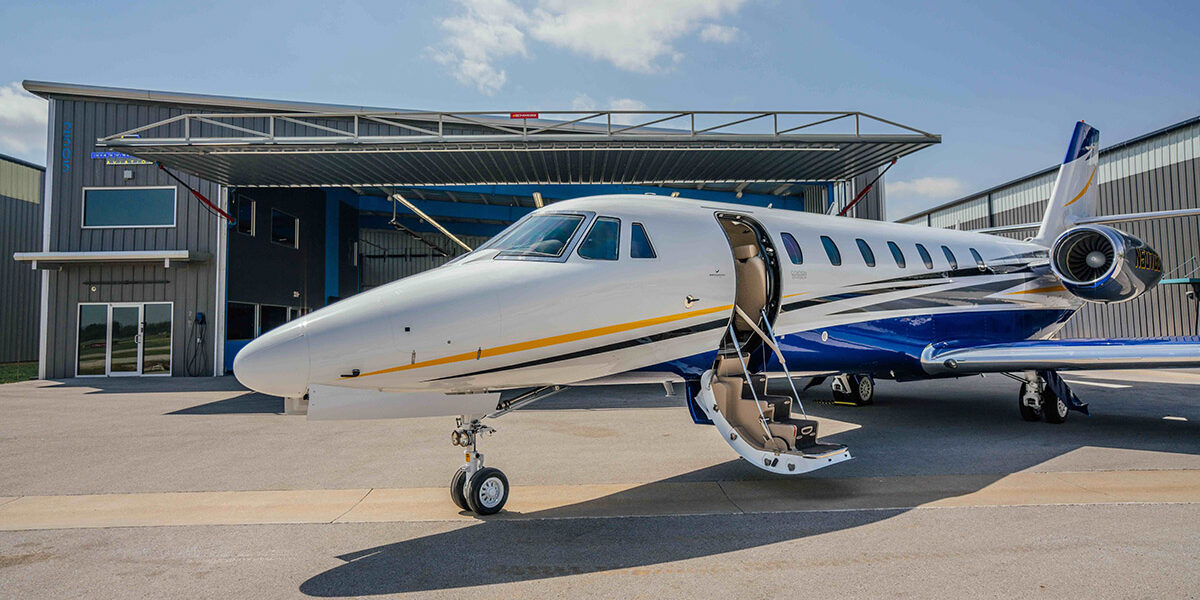
Bentonville-based Buffalo River Aviation Services LLC has secured its own Federal Aviation Administration Part 135 air carrier certificate, positioning the regional flight department to operate on-demand private charter flights under its own authority. The certification allows the operation to fly passengers under Title 14 of the Code of Federal Regulations Part 135, a standard that requires rigorously maintained aircraft, well-trained pilots, and specific safety management systems. This milestone creates a significant opportunity for business and leisure travelers in Northwest Arkansas to access more efficient air travel options without relying on the rigid schedules of major commercial carriers.
The achievement marks the culmination of acquisitions that have expanded Buffalo River’s footprint across Arkansas and into the River Valley. The company grew its operation through the purchase of Silver Airways (Arkansas) and Forest Hills Jet Air, which previously operated under the authority of other carriers. By consolidating these entities, the organization has simplified its road map and gained the critical mass needed to fully utilize a Part 135 certificate. This autonomy changes how the flight department coordinates flights, manage aircraft availability, and negotiate fuel and service contracts across its network.
For the local business community in Bentonville and Rogers, this change impacts practical travel needs. The Part 135 authority enables Buffalo River to transport groups from multiple locations directly to destinations that might otherwise require a layover in Dallas, Little Rock, or Memphis. Corporate executives using the Bentonville airfield for business often prioritize time. Accessing a flight arrangement that allows for a custom itinerary means skipping the congestion of larger hub airports and arriving at the final destination faster.
The transition to its own authority also opens the door to fleet modernization and expanded range. With the independence gained from Part 135 certification, Buffalo River can upgrade its fleet to include newer, more fuel-efficient turboprops and jet aircraft. This is particularly relevant for the Arkansas market, which spans from the Rolling Plains to the Ozark National Forest. Companies serving clients in the Forest Hills area or those traveling to destinations like Branson now have a local option that can handle larger payloads and longer flight durations compared to standard Part 127 operations.
Commercial aviation in Arkansas has seen a surge of growth, with airports in Northwest Arkansas and the River Valley seeing increased traffic. Arkansas International Airport in Marianna continues to expand cargo and passenger capabilities, serving as a logistical hub for the region. Within the immediate Northwest Arkansas corridor, Buffalo River’s move enhances the options available at airports like Robinson Field in Bentonville. By moving to a Part 135 classification, the operation can legally transport passengers on cross-country trips and international charters, provided proper weather conditions and certifications are met.
The significance of this status goes beyond just comfort. It speaks to the depth of qualified aviation professionals in the area. Acquiring Part 135 authority requires the company to hire and retain crews that meet stringent federal standards for both technical piloting skills and company management protocols. The operator will manage its own maintenance programs and ground operations, integrating these processes into the day-to-day operations at Buffalo River’s home base in Bentonville and its outstations in the state.
Families and small groups also stand to benefit from this regulatory evolution. Charter flights allow for direct connections to smaller destinations that major airlines frequently bypass. Whether heading to a hunting lease in the Ouachitas or visiting relatives in Little Rock, travelers utilizing this service can avoid the rigid boarding structures of the airlines and adapt flight schedules to their specific needs.
Buffalo River Aviation’s new authority shifts the operational model for the local flight department. It transforms the organization from a small operator into a fully certified air carrier. That status allows the company to compete more effectively with regional airlines for business contracts. For the Bentonville business scene, where logistics and speed are often paramount, having a local, independent option that can fly without restrictions provides a competitive advantage
Source: Talk Business & Politics