Arkansas State University’s College of Veterinary Medicine is expanding its community footprint before students even step into classrooms this fall. The new college has launched a Large Animal Ambulatory Service, bringing veterinary care directly to livestock producers across Northeast Arkansas and the Delta region.
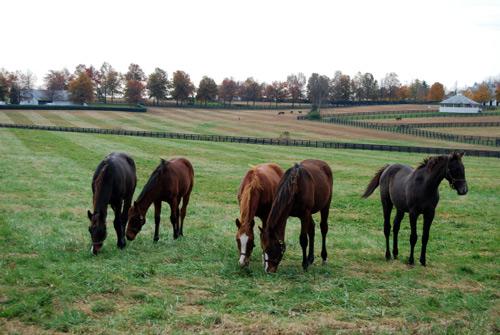
The service, which began operations this month, sends experienced veterinarians to farms and ranches to treat cattle, horses, and other large animals on-site. This eliminates the need for producers to transport sick or injured animals — often a stressful and costly endeavor.
“This is exactly what a new veterinary college should be doing,” said Dr. David Caldwell, who will lead the ambulatory service. “We’re meeting producers where they are. That’s what builds trust, and that’s what builds a program that lasts.”
The College of Veterinary Medicine welcomed its inaugural class this fall, marking the first vet school in Arkansas in more than a century. The program addresses a critical shortage of large animal veterinarians in rural parts of the state, where livestock operations struggle to find reliable veterinary care.
Arkansas has roughly one veterinarian for every 1,500 cattle statewide, compared to the national average of roughly one per 800. The disparity is even starker in the Delta and eastern Arkansas, where many cattle operations are located hours from the nearest large animal practice.
A-State administrators said the ambulatory service was always part of the plan. The college received approval from the Arkansas Higher Education Coordinating Board in 2023, and officials have spent the past two years building partnerships with local producers and veterinary practices.
“We didn’t want to wait until we had a full cohort of students to start serving the community,” said Dr. Susan McFaddin, dean of the College of Veterinary Medicine. “Our faculty are ready, our equipment is ready, and the need is real. This is what we signed up for.”
The service will operate five days a week, with after-hours emergency calls routed through the college’s existing animal health hotline. Veterinarians will travel in specially equipped trucks capable of handling everything from routine vaccinations to emergency surgeries in the field.
Producers in Craighead, Mississippi, Poinsett, and Greene counties have already signed up for the service, according to college officials. The initial coverage area extends roughly 75 miles from the A-State campus in Jonesboro.
The launch comes at a particularly challenging time for Arkansas livestock producers. Feed costs have climbed roughly 15% over the past two years, and many ranchers report difficulty finding veterinarians willing to make farm calls. Some have resorted to treating sick animals themselves or driving hours to the nearest clinic.
“I’ve got 200 head about 20 miles outside of Jonesboro, and the nearest large animal vet is 45 minutes away,” said Mark Tilley, a cattle producer in Greene County. “When a cow’s down, you don’t have time to load her up and drive an hour. This service is going to matter.”
The College of Veterinary Medicine represents a $52 million investment for A-State, funded through a combination of state appropriations and private donations. The program occupies a newly constructed 110,000-square-foot facility on the Jonesboro campus, with attached livestock barns and pasture space for teaching herds.
First-year students will begin clinical rotations through the ambulatory service in their third year of the four-year program. College leaders said the early launch allows faculty to refine protocols and build relationships with producers before students arrive.
“We’ve got a real opportunity here,” Caldwell said. “Not just to train good veterinarians, but to show the next generation what it means to be embedded in your community. That’s not something you can teach from a textbook.”
Source: Talk Business & Politics